
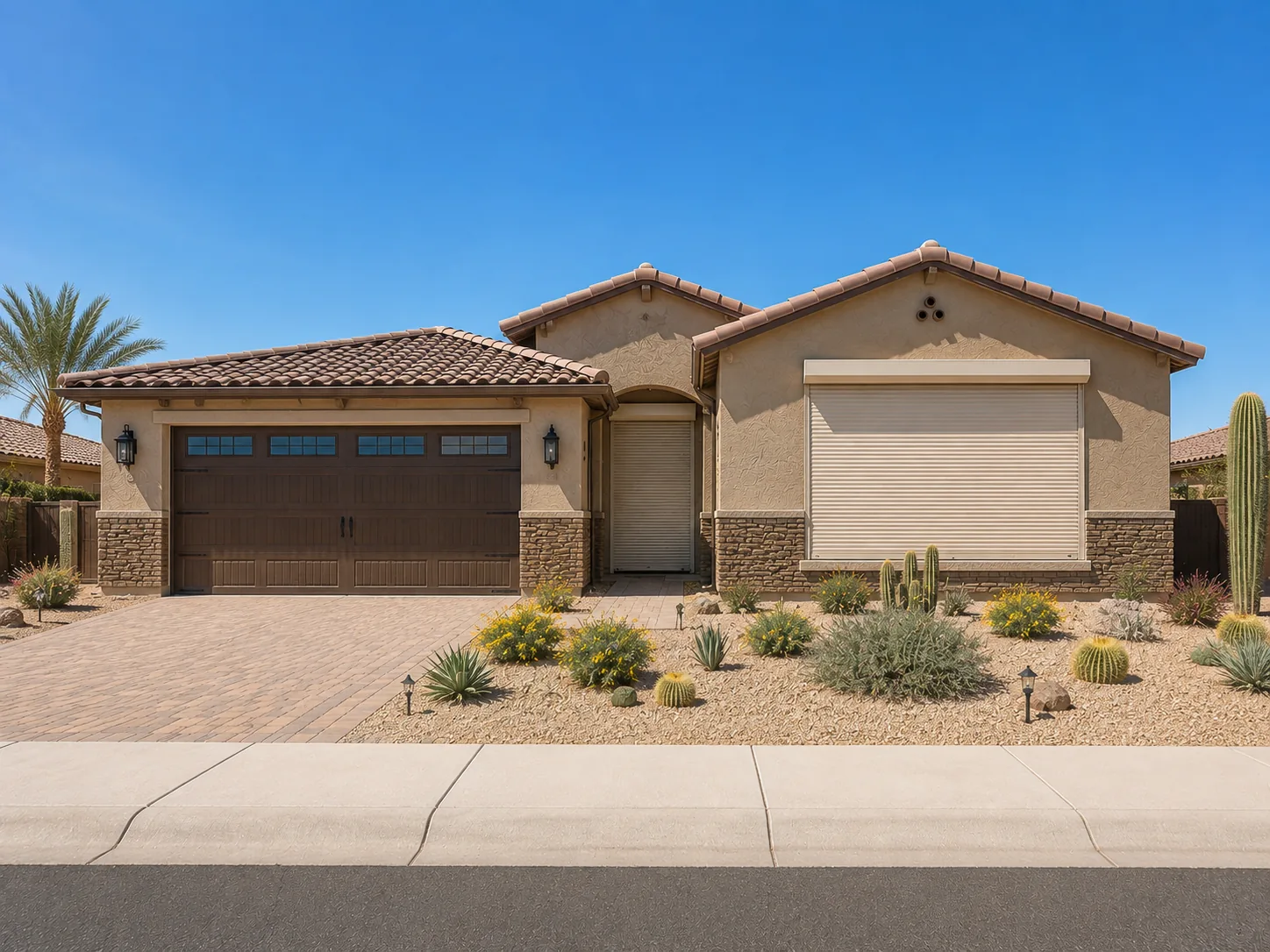
Metro Phoenix Snowbird Homes
Rolling shutters for Metro Phoenix homes that sit empty half the year
Your home in the Valley spends its unoccupied months in the hardest part of the year. Sun, heat, monsoon dust and wind-driven debris all reach the house through its openings, and no one is on site to close anything when a storm comes through. Roll-A-Shield builds rolling shutters at its Arizona facility for the exact opening each one protects. They close over that opening before you fly out and stay closed until you are back.

Snowbird Basics
What happens to a Phoenix home while you are away for the summer?
The months your home sits closed are the months the Valley is hardest on it. Sun sits on the same openings day after day, and monsoon season runs June 15 through September 30, the window the National Weather Service uses to define the season. Storms move through whether or not anyone is there to close something, and no one is. A rolling shutter is an exterior aluminum barrier that mounts outside the glass and covers the full opening. Closed before you leave, it stays closed, and sun, dust, rain and debris reach aluminum instead of the window. The rest of this page covers which openings matter most on a seasonal home, what rolling shutters in Arizona actually do about vacation home security, and how they are operated once you are out of state. See everything we build and install across the Valley on the Metro Phoenix rolling shutters page →
Local. Experienced. Trusted.
Proudly manufacturing in Phoenix, AZ since 1979. Thousands of homeowners and businesses across Metro Phoenix trust Roll-A-Shield to protect what matters most.
Your Year In The Valley
The two halves of a seasonal home
A seasonal home runs on two settings. The same shutter does a different job in each.

In residence
While you are living in the home. Closed on street facing glass, the shutter covers the full opening, so the room is private and dark on demand and you can open it partway for filtered daylight instead. On east and west openings it blocks the sun before it reaches the glass, which cuts heat and glare at the outside of the building. The aluminum slats and the trapped air pocket act as a sound barrier against outside noise. At night the opening closes, and the curtain is held in guide rails on both sides.

Away
While the home is closed. Every opening you covered stays covered. The shutter is mounted outside the glass, so the sun that would otherwise sit on that window all summer lands on aluminum, and the monsoon dust and debris that arrive between June 15 and September 30 hit the shutter face first. Nothing has to be closed when a storm builds, because nothing was left open. No one has to be on site.
What The Openings Face
Four things that reach a closed up house
None of these need anyone to be home. They arrive on the openings whether the house is occupied or not.
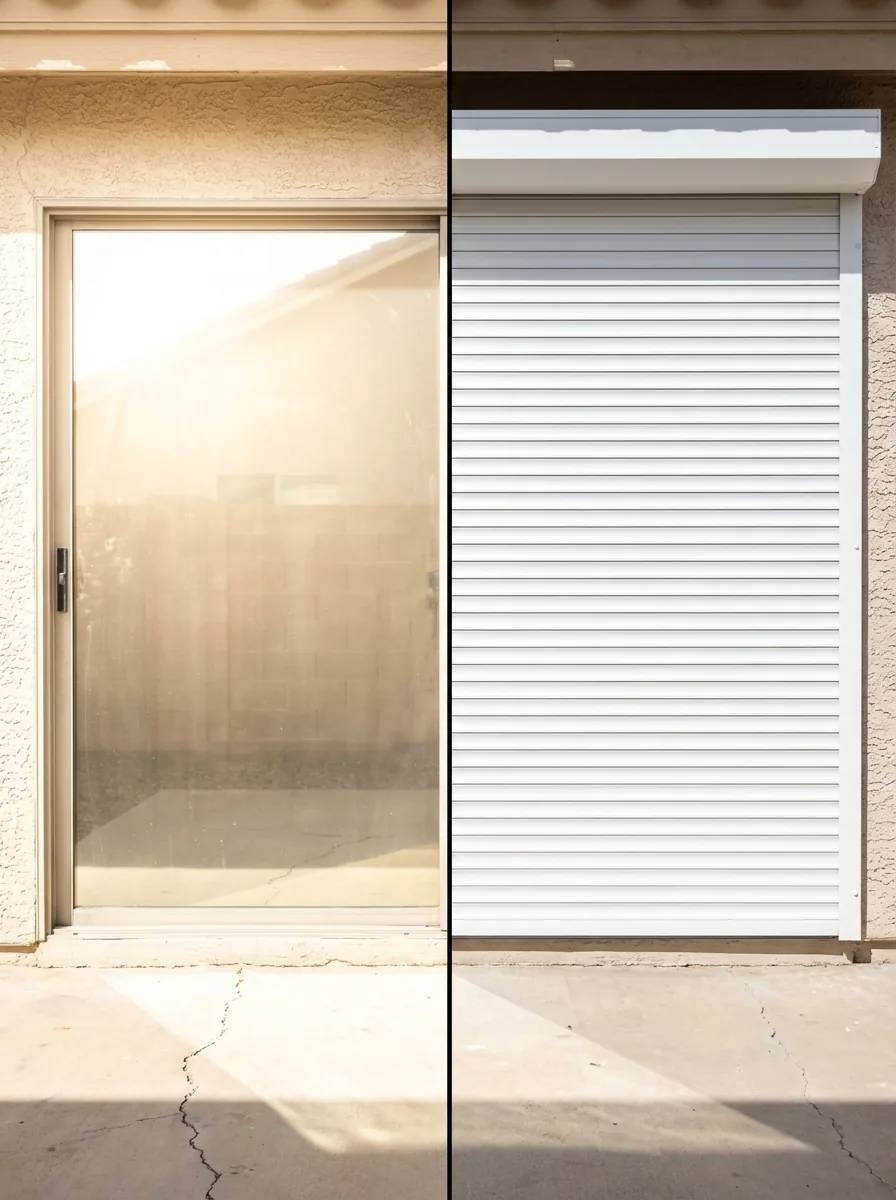
Direct sun on glass
The same openings take unbroken exposure day after day for the length of your absence, and the house is closed the entire time. A closed shutter blocks the sun before it reaches the glass.
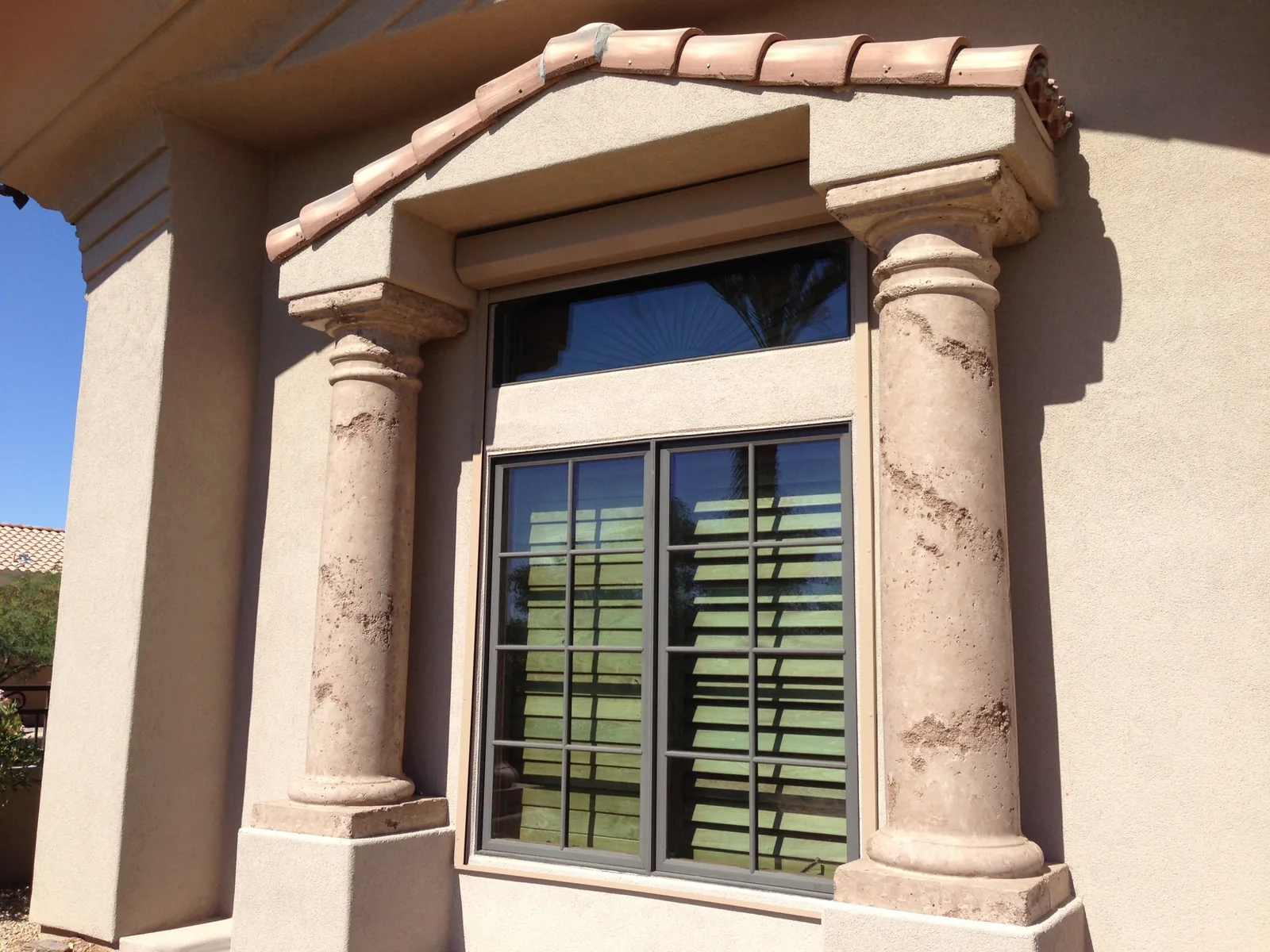
Heat load
Sun lands on the same glass all day, in rooms nobody is cooling to a normal setting. Foam-filled aluminum slats create an insulating air pocket between the shutter and the window, and that extra layer keeps heat out in summer.

Dust and wind-driven debris
Between June 15 and September 30, the window the National Weather Service uses to define the season, fine desert dust reaches window frames and interiors through any opening that is not covered, and wind-blown debris reaches the glass.

An opening nobody is watching
Ground floor windows, sliders and side entry doors sit on a property with no one on site for months. What matters is whether the opening is covered, not whether anyone is there to notice.
Rolling Shutters
What a closed shutter does on an empty house
Roll-A-Shield builds four slat profiles: the 38 mm insulated slat, the 55 mm insulated slat, the 63 mm HD solid and the 63 mm HD perforated. Whichever one goes on the opening, a closed shutter does the same five things.
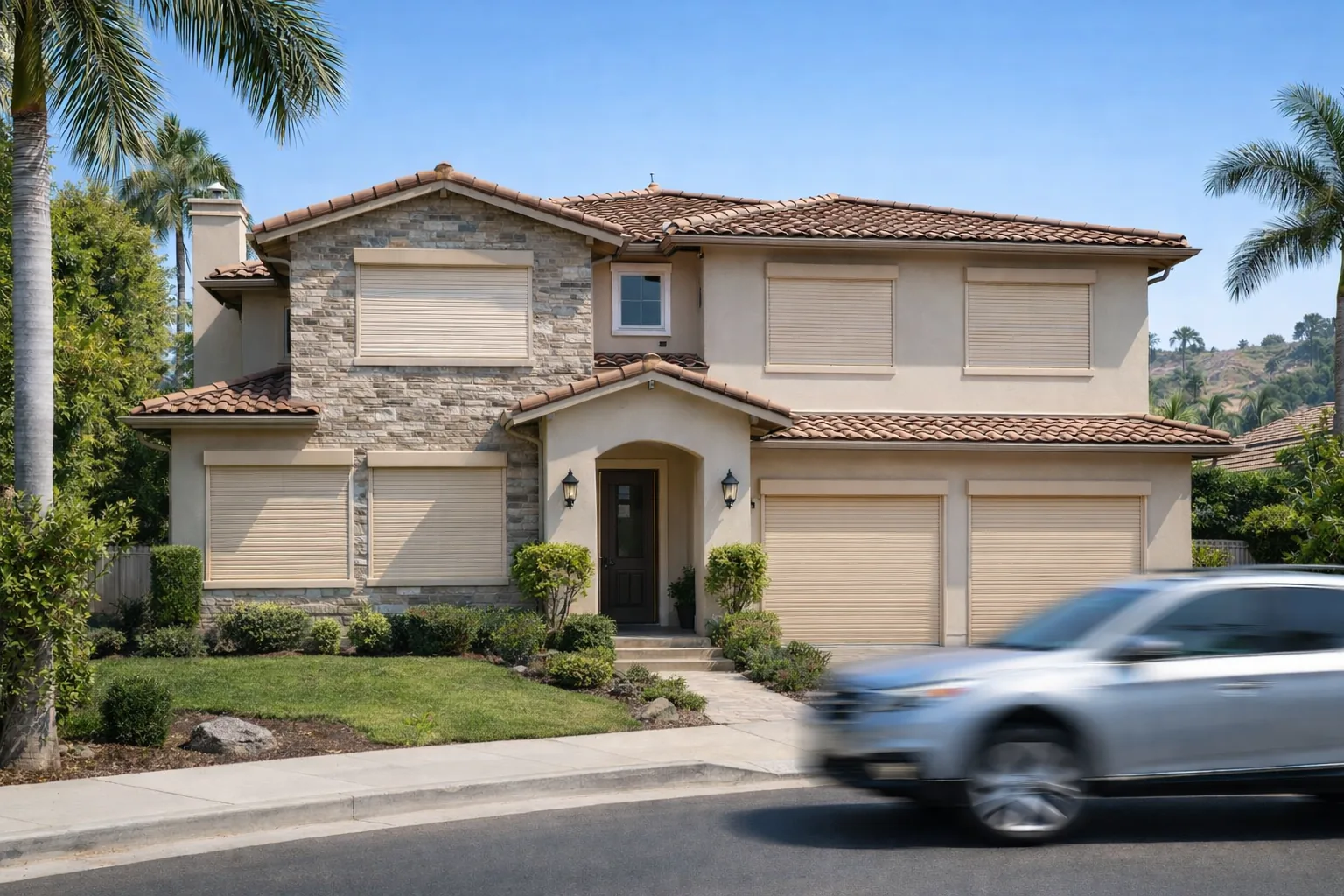
Operation
How the shutters are operated once you have left
Here is how a Roll-A-Shield rolling shutter is operated, in the order it matters to someone who will be out of state.
What the motor operates from
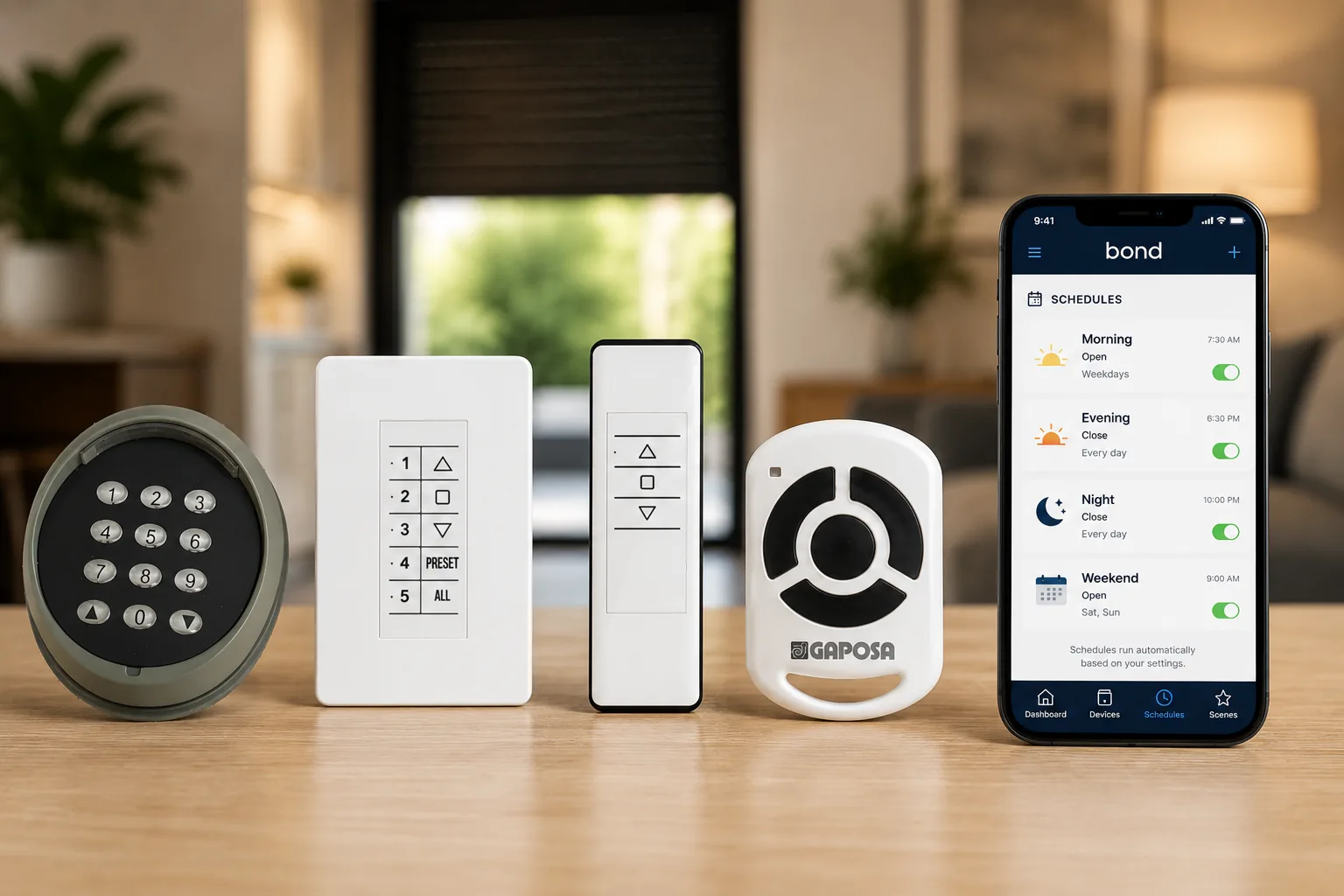
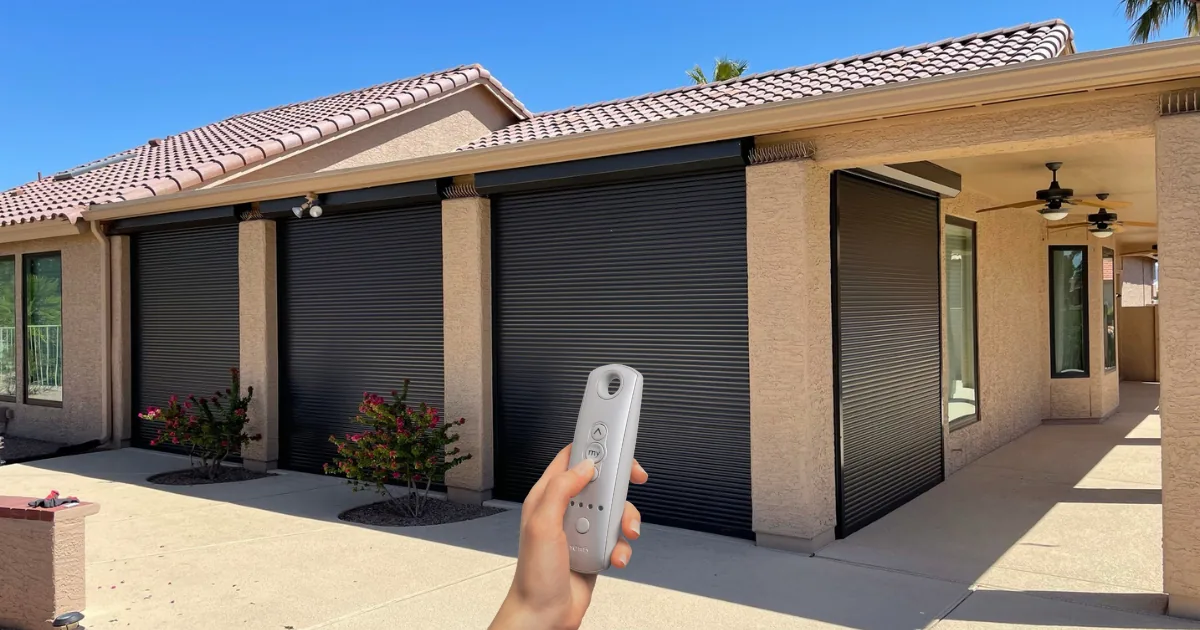
A motorized shutter runs from a handheld remote, a wall switch, or your phone. A multi-channel remote can operate an individual shutter, a group of shutters, or every shutter on the property from one handset. Roll-A-Shield offers remotes, wall switches, key fobs, keypads and smartphone app control. Motors are Somfy or Gaposa tubular motors, and any shutter over about 12 feet wide or 100 pounds has to be motorized.

Scheduling and timers
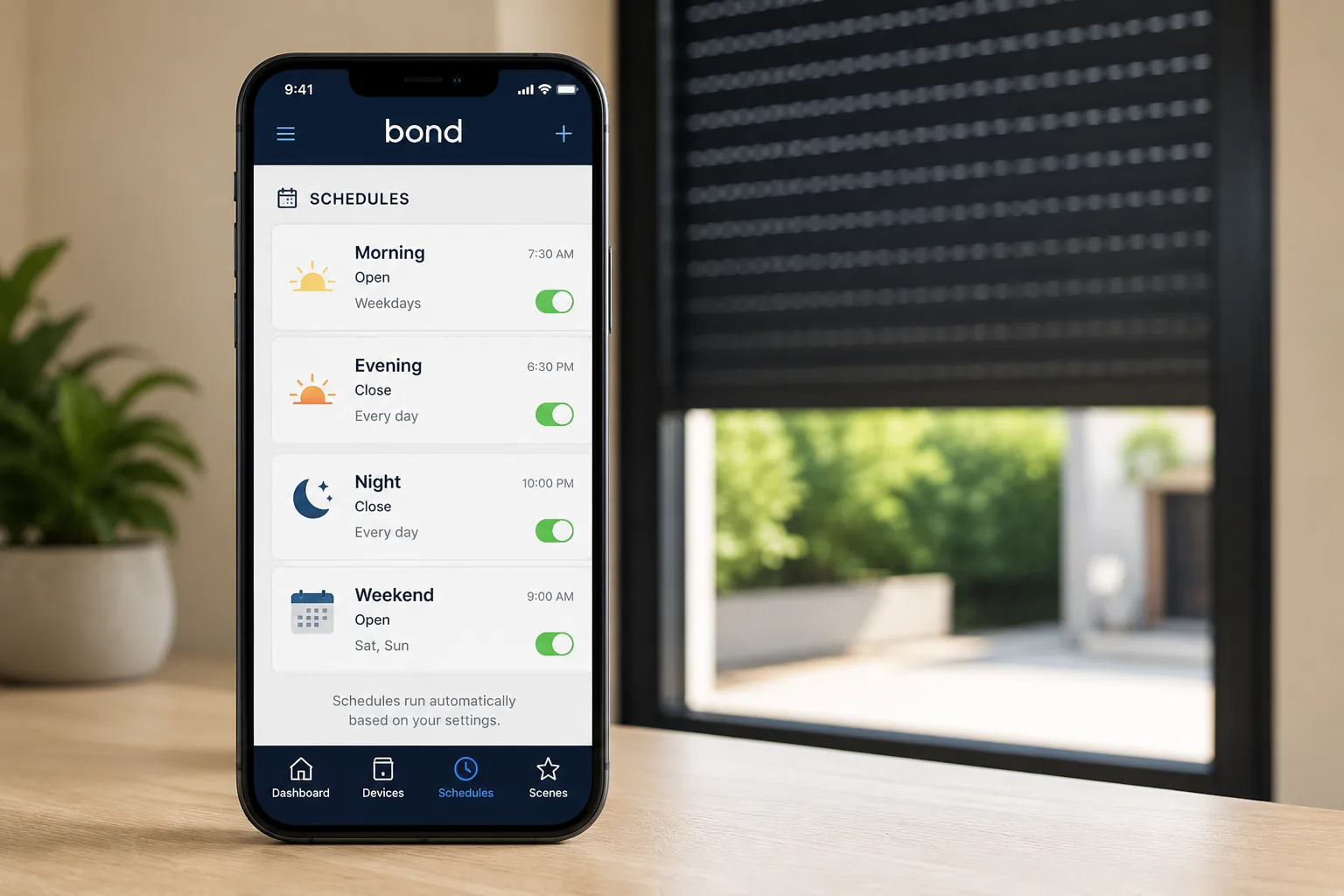
Scheduling is available through the Bond Bridge covered below. The Bridge lets you build schedules such as opening in the morning and closing at sunset, or lowering the shutters on the hot side of the house every afternoon. There is no separate timer product for these shutters.
App and smart home control, and what it requires
App control is available, and it requires specific hardware. A compatible motorized shutter can be upgraded with a Bond Bridge, a small Wi-Fi hub that works with Roll-A-Shield remote-control Somfy or Gaposa motors. With the Bridge in place you can control your shutters from your phone whether you are home or away, and use Alexa and Google Assistant voice commands. One standard Bridge covers a home of up to about 2,500 square feet.
Your specialist confirms which of your motors can pair with a Bridge and walks you through setup on your quote.
See motors, controls and Bond Bridge setup →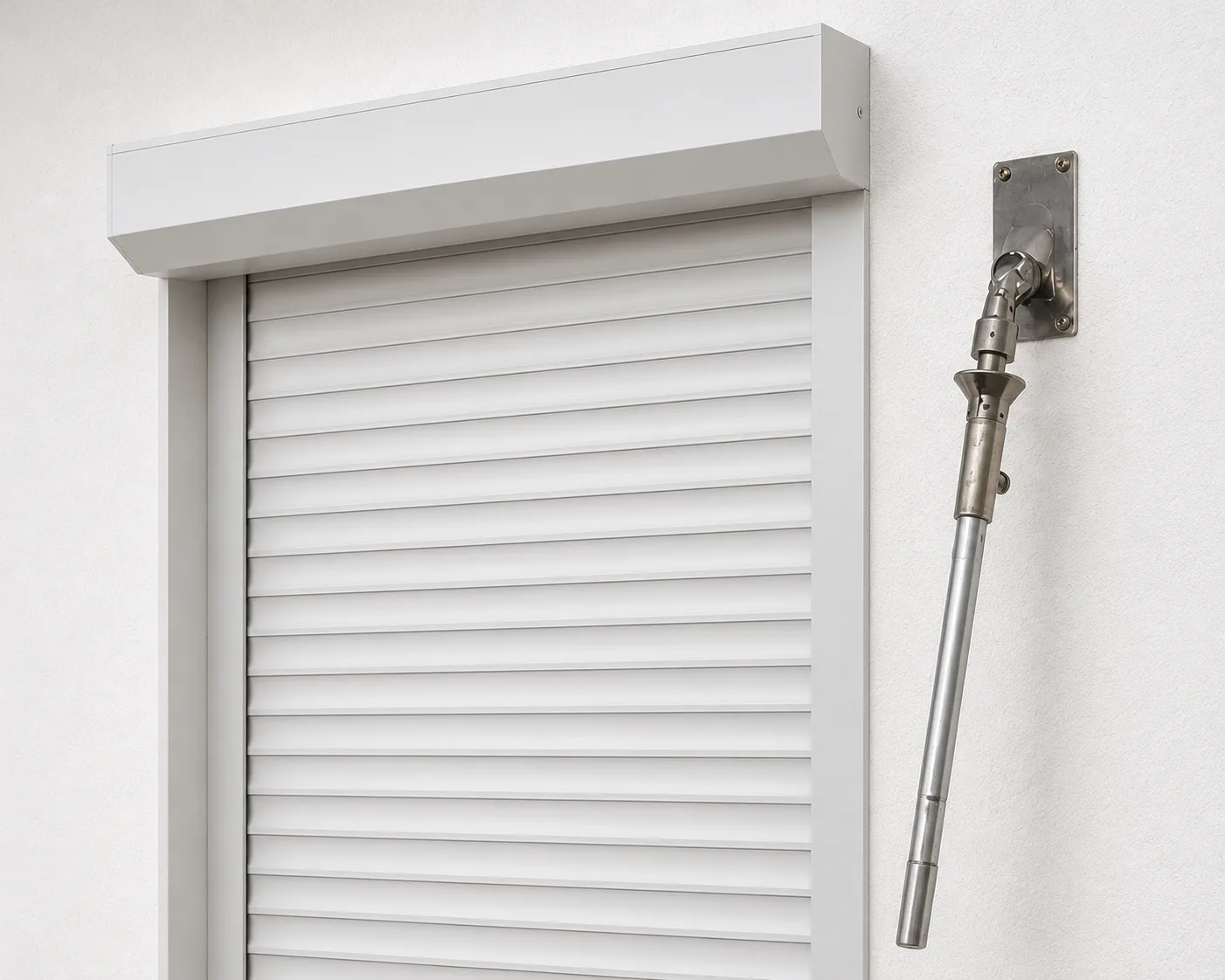
During a power interruption
Wired and remote motors are available with a hand-crank manual override, so the shutter can be operated when the power is out. Solar and battery motors keep running on their own stored charge, and optional battery backup solutions are available that allow motorized operation during extended outages. A shutter that was already closed before you left stays closed through an outage, because nothing has to happen for it to hold position.

What someone on the ground can operate
If a neighbor, property manager or family member needs to open or close an opening while you are away, a multi-channel remote operates one shutter, a group, or all of them from a single handset, and a lockable key switch gives secure manual control at the wall. A hand-crank manual override operates the shutter without power. Manual shutters use a crank handle, tape drive, or pull-down strap with a built-in lock.
Leaving And Coming Back
Before you fly out, and the week you get back

Before you leave
- Close the shutters on all west and south facing glass.
- Close the ground floor openings and any side entry doors.
- Confirm the operation method you will actually be using from out of state, and test it once before you go.
- Walk the guide rails and check that nothing is leaning against them or sitting in the track.
- Book service before you leave if a unit is sticking, running slowly, or not seating fully at the bottom.
When you return
- Check the guide rails and boxes for dust that accumulated over monsoon season.
- Run each motorized unit through one full open and close cycle.
- Replace the batteries in remotes and key fobs.
- Schedule any service while you are in town rather than leaving it for next season.
Where To Start
If you are not covering the whole house
Most seasonal homes get covered in phases. These are the five situations that come up most for rolling security shutters for windows, doors and patio openings, and the product that fits each one.
A specialist confirms the combination for your openings during the free on-site estimate.
Where Rolling Shutters Go to Work
Openings a seasonal home closes down
The same shutter fits a bedroom window and a wall of patio glass. These are the openings that come up most on a seasonal home.
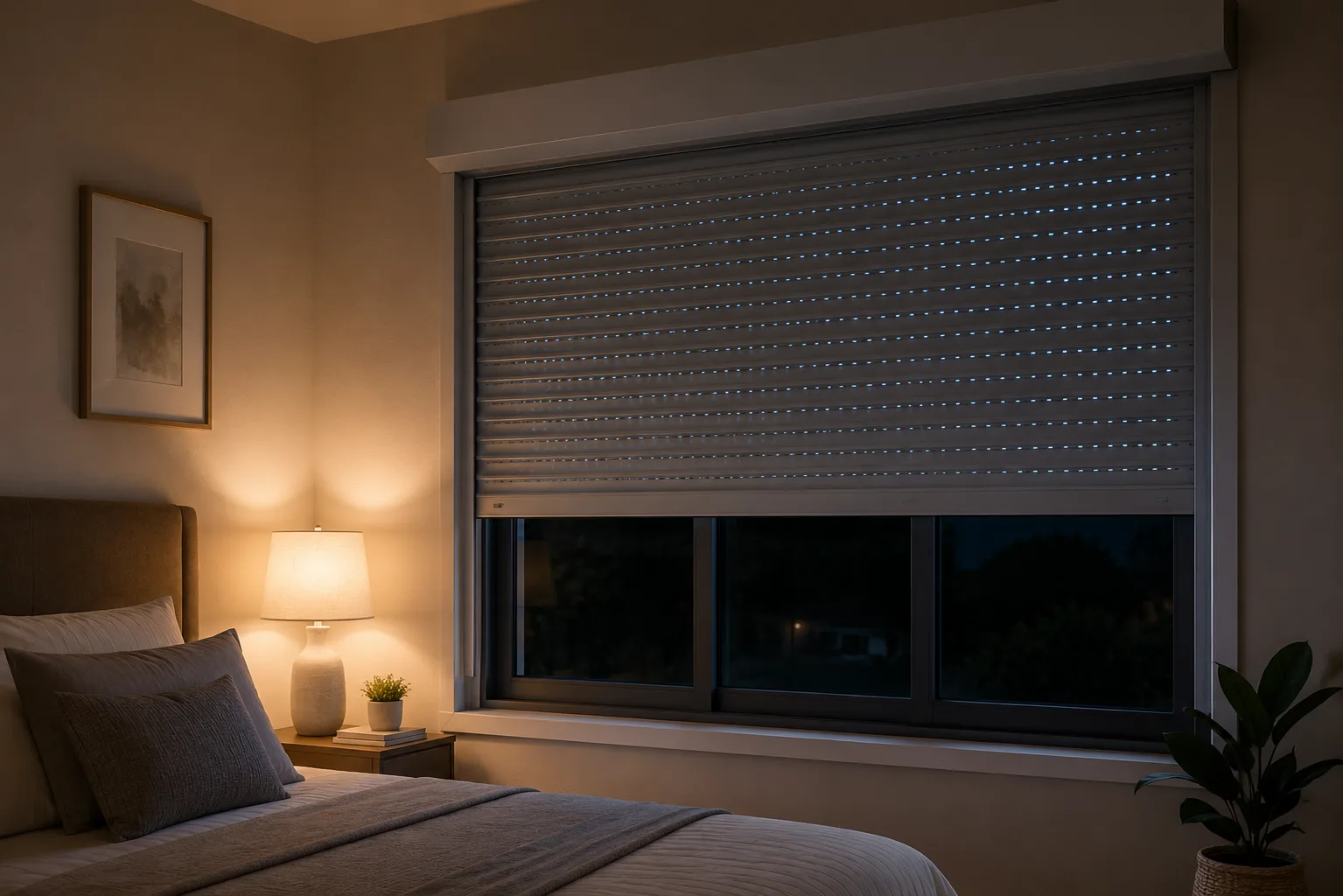
Windows
Bedroom, living room and street facing glass.
The openings that take the longest sun load while the house is closed.
See window shutters →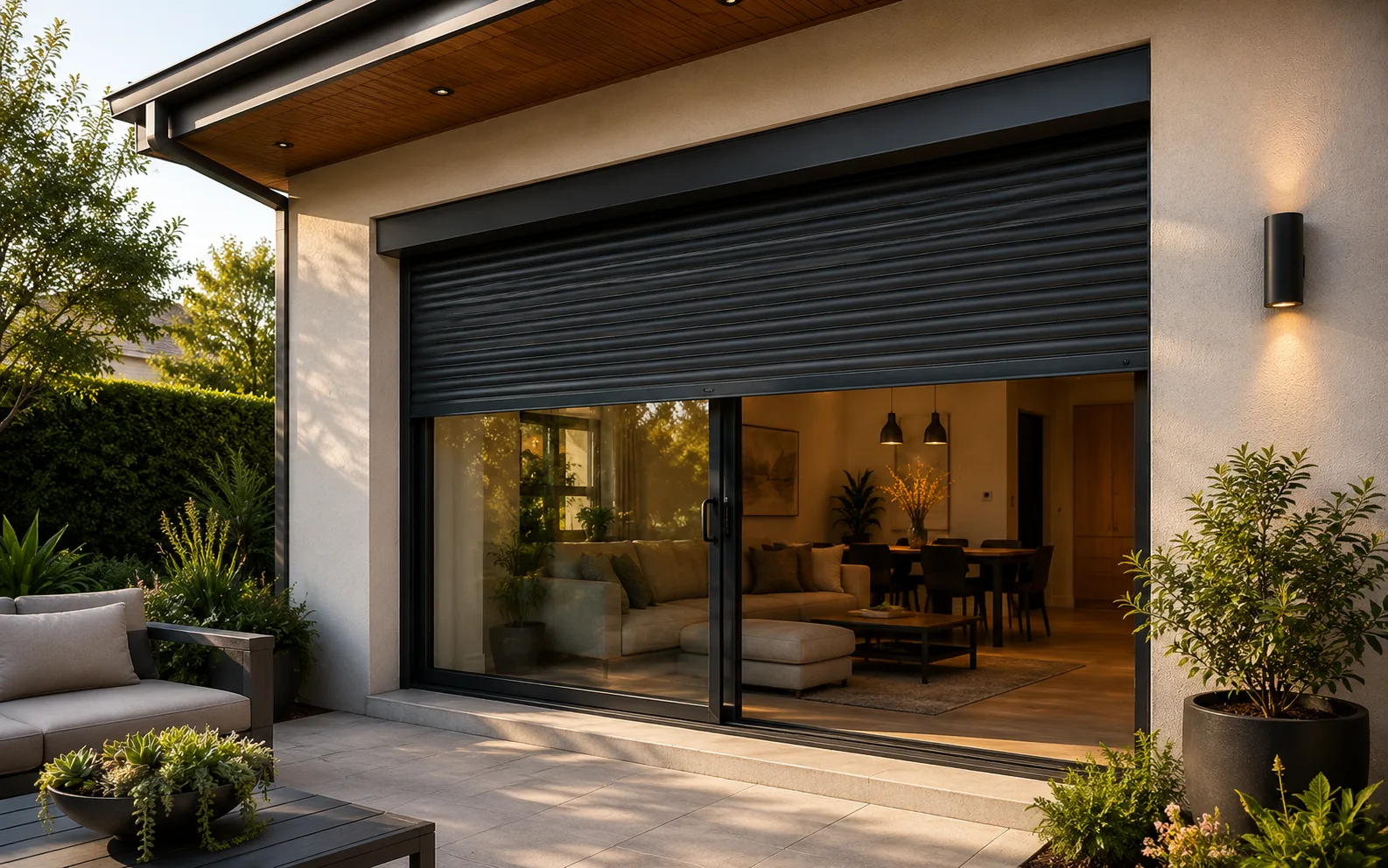
Patio and sliding glass doors
Sliders and large glass openings.
The largest single expanse of glass on most Valley homes, and the most costly to repair or replace.
See patio and slider shutters →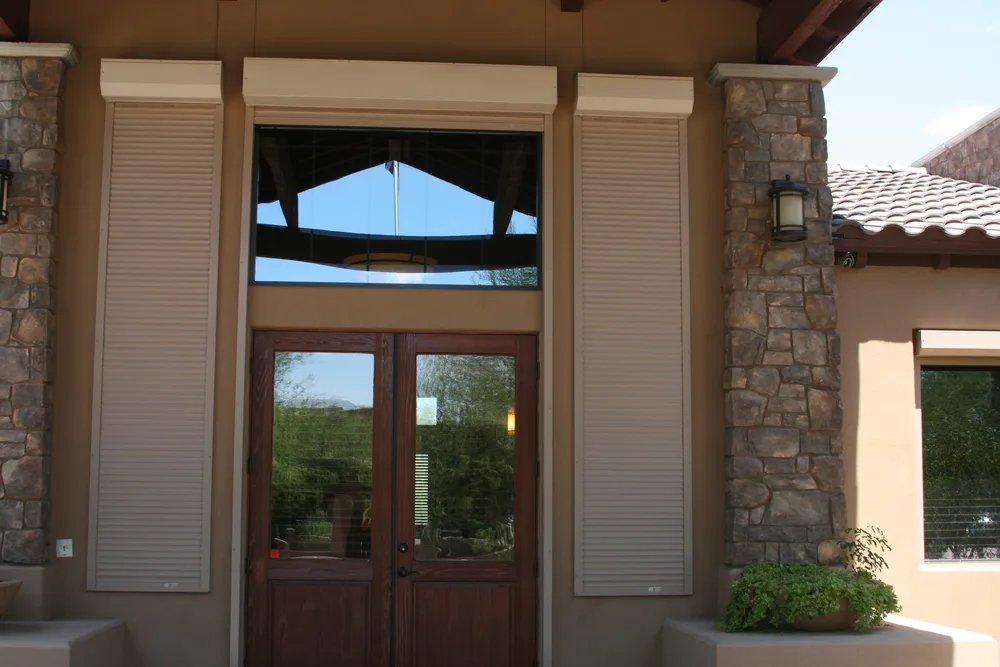
Entry doors
Front, side and service entries.
Side and service doors on a property with no one on site for months.
See entry door shutters →
Outdoor living areas
Covered patios and outdoor rooms.
Closing the space down for the summer instead of leaving it open to dust.
See outdoor living enclosures →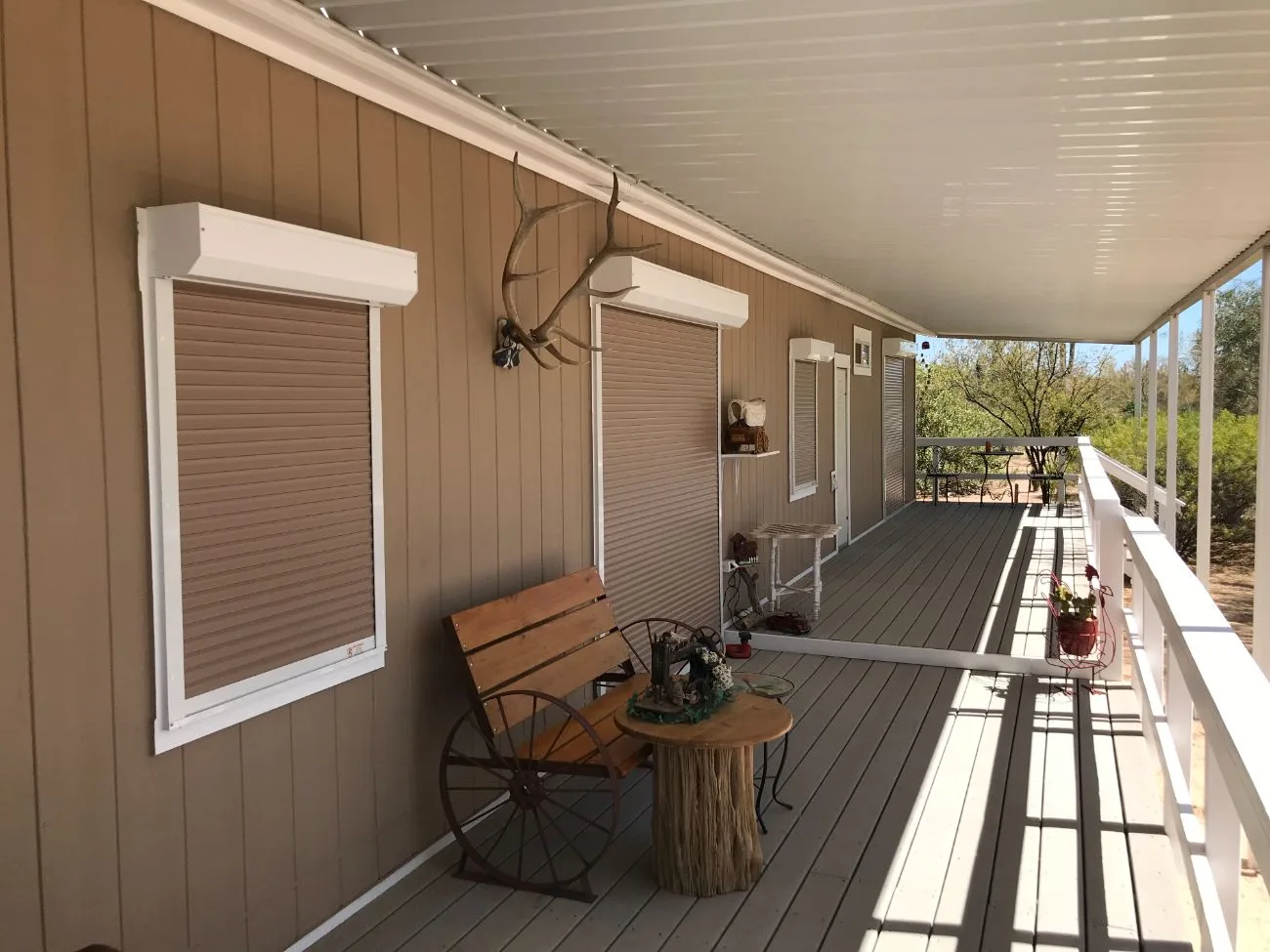
Sun and heat protection
Blocking sun before it reaches the glass.
West and south exposures during the months nobody is cooling the house to a normal setting.
See sun and heat protection →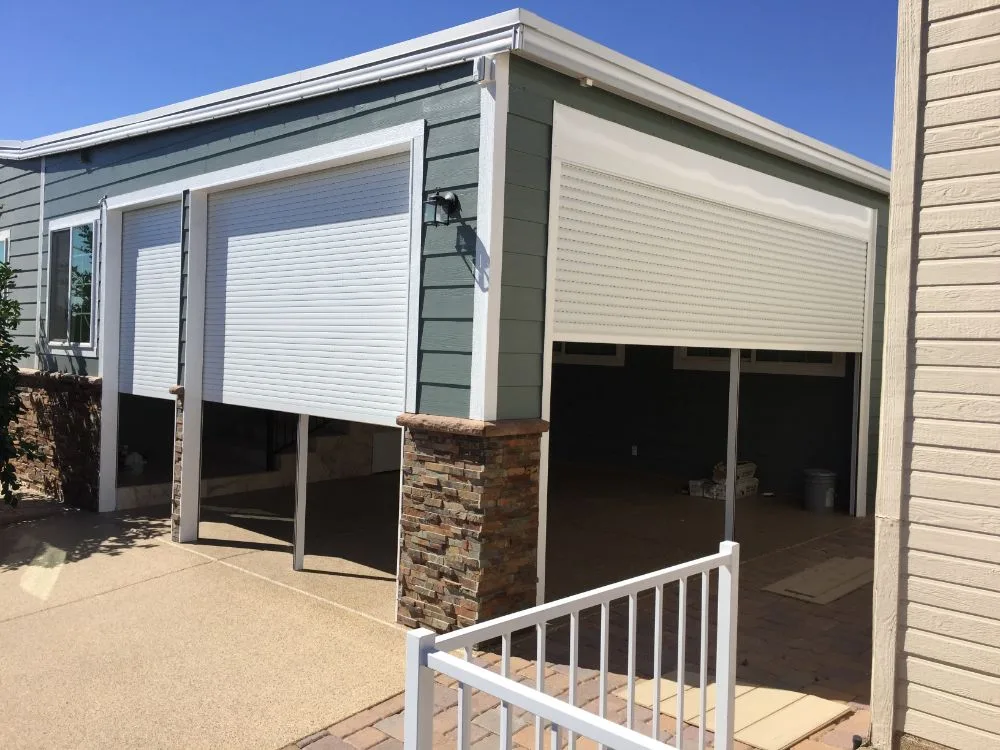
Vacation and seasonal homes
Homes that sit closed for part of the year.
Including homes that are rented out during the months the owner is away.
See seasonal home coverage →Financing available
Ask about current financing options during your free estimate and spread the cost of your rolling shutter project over time.
Inside The Build
The parts that matter on a house nobody is checking
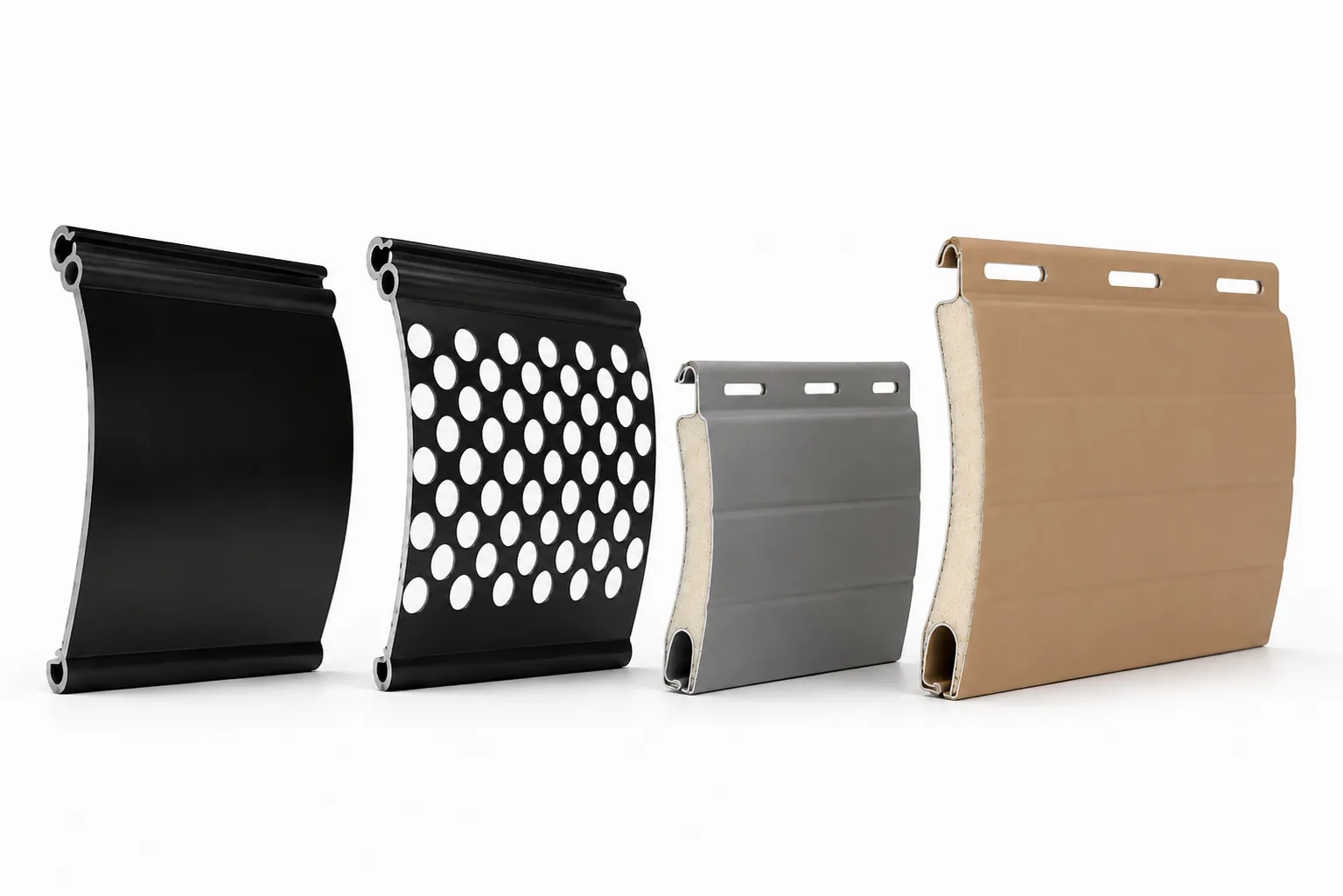
Slat and curtain
The curtain is made of interlocking aluminum slats that coil around a tube above the opening and come down through the guide rails to form a flush, solid face over the full opening. Roll-A-Shield builds four profiles so the shutter is matched to the opening, and the aluminum is extruded, selected for its strength to weight ratio, corrosion resistance and durability.
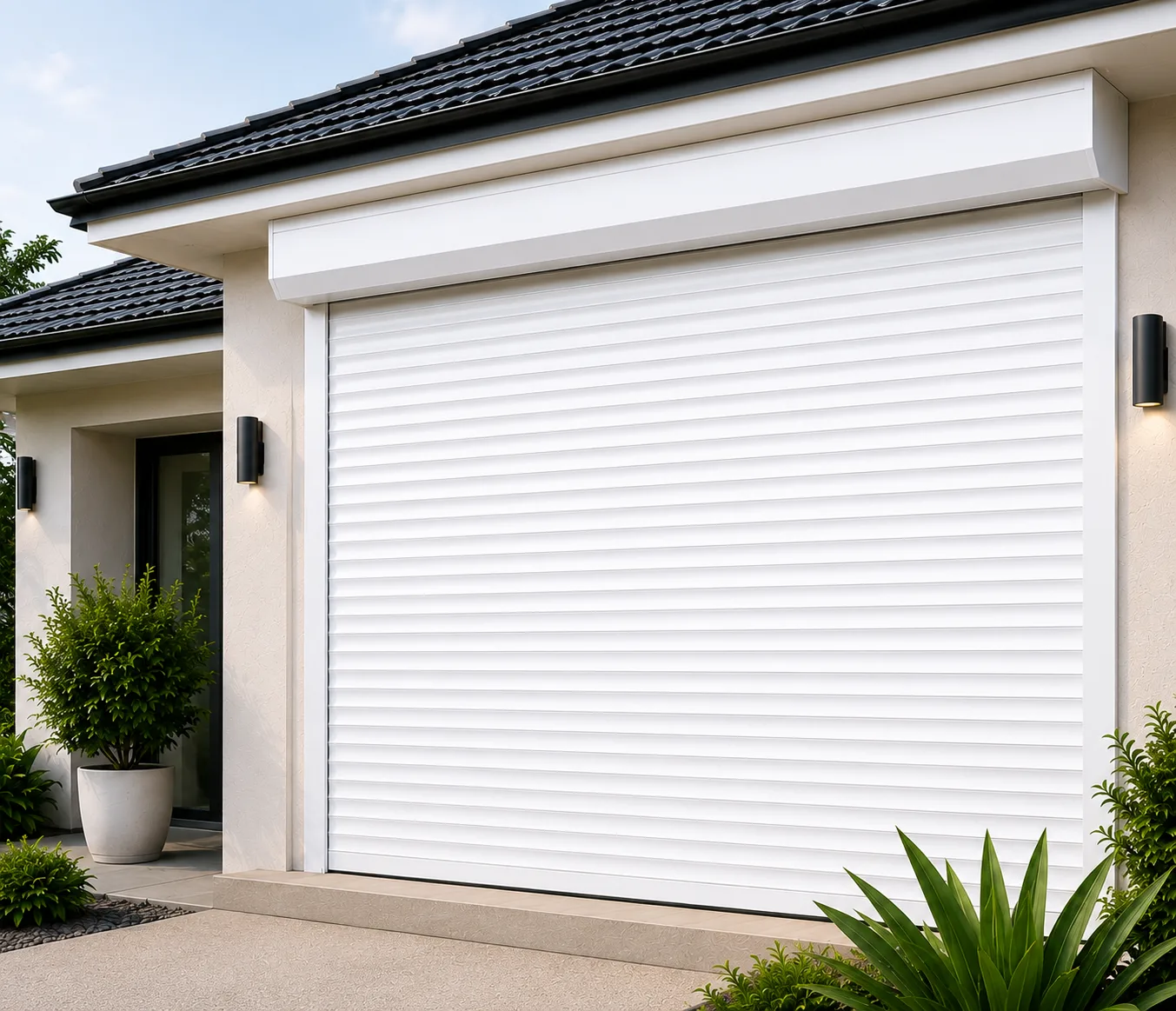
Guide rails and box
The curtain runs in reinforced guide rails on both sides of the opening, and the box above the opening houses the curtain when the shutter is up and out of sight. The whole assembly is exterior mounted, which is what puts the aluminum between the weather and the glass.

Motorization and controls
Motorized shutters run from a remote, a wall switch, or a phone. Somfy and Gaposa tubular motors run with soft start and soft stop, and stop movement when an obstruction is detected. Phone, schedule and voice control require a Bond Bridge, a small Wi-Fi hub that works with remote-control Somfy or Gaposa motors, and one standard Bridge covers a home of up to about 2,500 square feet. Wired and remote motors are available with a hand-crank manual override for operating the shutter when the power is out.
See motors and controls →
Build and service in Arizona
Roll-A-Shield has been manufacturing in Phoenix since 1979, licensed, bonded and insured under Arizona ROC 342265. Each shutter is custom built for the exact opening it protects and installed by our own local crews rather than subcontractors, which means measuring, manufacturing, installation and warranty service all come from one Arizona company. Service can be scheduled while you are in town.
How It Works
Simple process. Custom results.
Request a Quote
Tell us about your property and schedule your free on-site estimate.
On-Site Consultation
A local specialist evaluates the opening and recommends the best solution.
Custom Built
Your shutters are manufactured in Phoenix for the exact opening.
Professional Installation
Our own local crew installs and tests the finished system.
What Affects Price
What rolling security shutters cost on a Metro Phoenix seasonal home
Because every shutter is custom built, there is no one size price. On a seasonal home the biggest variable is usually how much of the house you are covering, so that leads.
General guide: a single residential window typically runs about $800 to $3,500 installed. Your exact price comes from a free on-site estimate. See our full cost breakdown for more detail.
Read the Cost Guide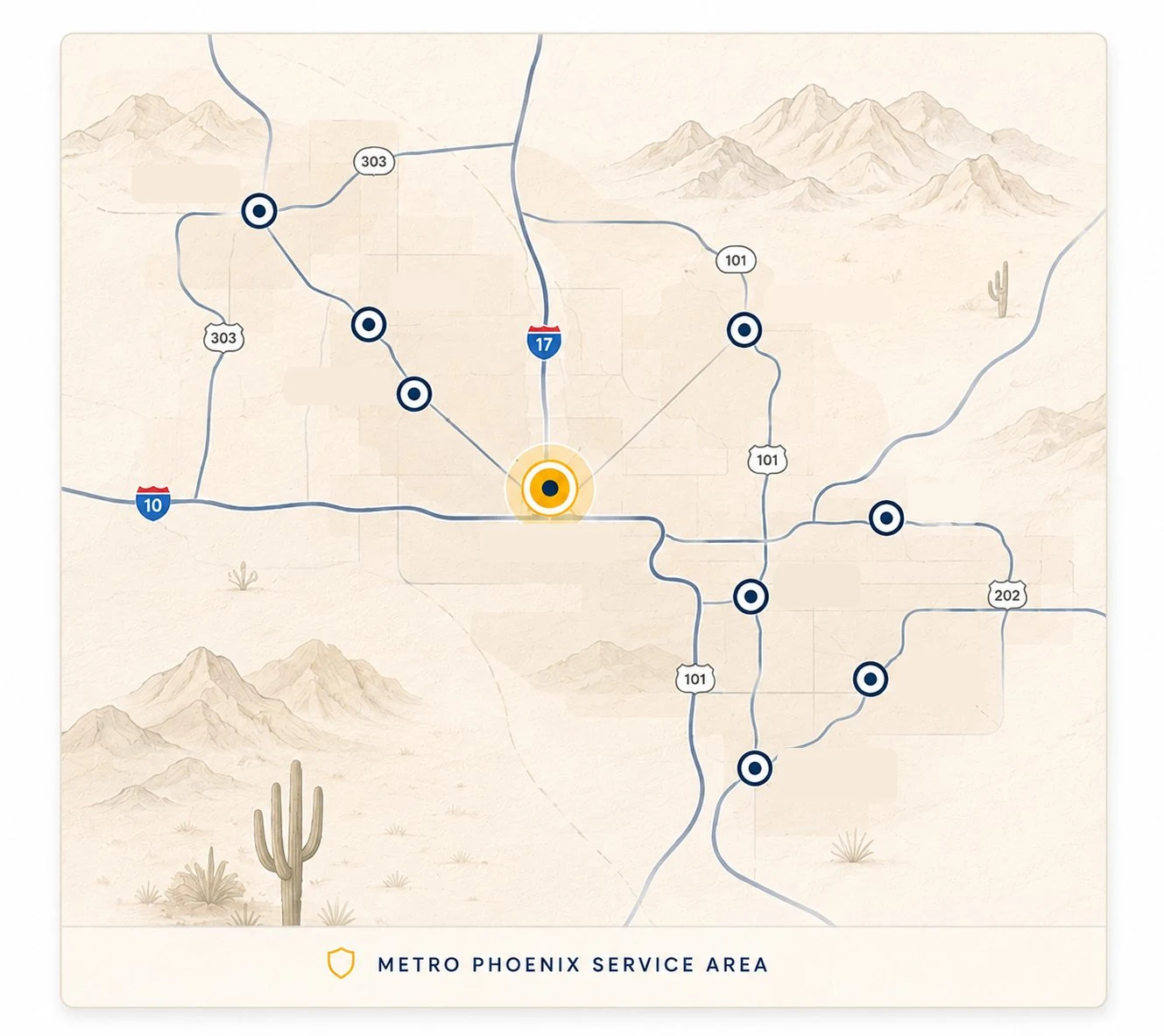
Proudly Serving
Metro Phoenix seasonal homes
From Surprise to Gilbert and everywhere in between, we build and install rolling shutters across the entire Valley.
What Our Customers Say
Trusted by your neighbors across the Valley
“Absolutely first class business in every respect. Highly recommend the team there. Never had a disappointment in 15+ years as a customer.”
David G.“Roll-A-Shield did a great job, from start to finish. A sales rep gave me a quote for two shades. I ended up only going with one, but was not pressured, at all, to also get the other shade. Pricing was fair, and they delivered exactly what I asked for in the exact date they said they would complete the job. Pleasure to work with everyone I came in contact with.”
Ralph C.“We updated our roller shields. We had the first set over 35 years and have updated the windows and wanted the new roller shields also. Very happy with the new look. We feel much safer in our home with them and it really helps with the electric bills.”
Richard C.★★★★★ 4.9 average across 211 Google reviews. Read them on Google →

Get it done before you fly out.
Schedule a FREE on-site estimate with a local rolling shutter specialist from Roll-A-Shield.
Keep Exploring
Where to go next
Metro Phoenix Rolling Shutters
The full picture on rolling shutters across the Valley, residential and commercial.
See the pillar →Rolling Shutter Motors and Controls
Motors, remotes, wall switches, and what phone and voice control require.
See motors and controls →How Much Do Rolling Shutters Cost?
Real cost ranges and the factors behind them, explained in full.
See the cost guide →Install timing before monsoon season
When to book so the shutters are installed and tested before June 15.
Read the timing guide →Rolling shutter slats
Compare the insulated profiles by span, insulation, and operation.
Compare slats →Monsoon and dust protection
What monsoon season sends at a closed-up house, and how shutters and screens handle it.
See monsoon protection →Shutter and screen warranty
Full written terms for each product, and how to start a claim.
Read the warranty →Shutter and screen financing
Monthly payment plans for residential projects, with each plan’s terms explained.
See financing options →Common Questions
Snowbird questions, answered.
Answers to what Arizona snowbirds ask us most about vacation home security before they leave for the summer.
01What do rolling shutters do for vacation home security when the house sits empty all summer?
They put an aluminum barrier on the outside of every opening you close before you leave. The curtain comes down from a box above the opening, runs in guide rails on both sides, and covers the opening from top to bottom using those rails and a bottom locking bar. Sun, dust, rain and wind-blown debris reach the shutter instead of the glass, and it holds that position for as long as you are gone. It does not create an airtight seal, but it substantially reduces what gets through. Closed, the opening is a flat aluminum face and is not visible from the street.
02How do you protect your home while on vacation for several months?
The difference between a two week trip and a six month absence is that nothing can depend on you being there. Home security on vacation usually leans on someone checking in. A rolling shutter does not. You close it on your way out and the opening stays covered with no one on site, no schedule to keep and nothing to reset. That is the whole argument for a physical barrier over an opening rather than a device that needs monitoring.
03When do snowbirds come to Arizona, and when do snowbirds leave Arizona?
Broadly, seasonal residents arrive in the fall and leave in the spring, so the home sits closed through the hottest months and through monsoon season. We do not publish arrival or departure figures and are not going to invent them. What matters for planning is the fixed date at the other end: monsoon season runs June 15 through September 30, the window the National Weather Service uses to define the season. Most Arizona snowbirds are gone before it starts, which is why the shutters need to be in and tested before you fly out rather than after.
04Can I close the shutters from out of state?
Yes, with the right hardware. A compatible motorized shutter can be upgraded with a Bond Bridge, a small Wi-Fi bridge that gives phone app and voice control of any of our remote-control RTS Gaposa or Somfy motors. With it in place you can control your shutters from your phone whether you are home or away, and use Alexa and Google Assistant voice commands.
05What does phone control actually require, and does it work with every motor?
Three things. A motorized shutter, a remote-control RTS motor, and a Bond Bridge. The Bridge works with any of our RTS Gaposa or Somfy motors, including the solar and battery-powered versions of those, because they still carry a remote receiver. It does not work with the battery OZRoll motor, which has no receiver at all. One standard Bridge covers a home of up to about 2,500 square feet and up to 30 devices, and it should sit reasonably central to the shutters. If control is ever spotty, moving the Bridge closer usually fixes it.
The standard Bridge is Wi-Fi only, so it depends on the home network staying up while you are away.
Your rep confirms Bridge options and setup on the quote.
06What happens if the power goes out while I am away?
Wired and remote motors are available with a hand-crank manual override, so the shutter can be operated when the power is out. Solar and battery motors keep running on their own stored charge, and optional battery backup solutions allow motorized operation during extended outages. A shutter that was already closed before you left stays closed through an outage, because nothing has to happen for it to hold position.
07Are these wind rated rolling security shutters?
We are not going to give you a number we cannot stand behind. Roll-A-Shield does not publish a wind speed, an impact rating or a test standard for these shutters, so treat any figure you see quoted elsewhere with caution until it comes with a standard attached.
What we can tell you is what the product is. The 63 mm single-wall profile is extruded solid aluminum and is the one specified for high-security and storm-exposed work, up to about 20 feet wide, with end retention. On any profile, the slats run in reinforced guide rails on both sides and the side rail and locking bar system keeps the curtain in place under lateral pressure. The closed face deflects driving rain before it reaches the window frame.
08How much do rolling security shutters cost in Phoenix?
As a general guide, a single residential window typically runs about $800 to $3,500 installed. The range is wide because every shutter is custom built, and on a seasonal home the biggest variable is usually how many openings you are covering. Opening size is the next largest driver, then the slat profile, then whether it is manual or motorized. All seven standard colors are priced the same, so finish is not a cost decision. Your exact price comes from a free on-site estimate. Read the cost guide →
09What does the warranty cover?
The current terms are the same for residential and commercial: shutter parts five years, motors five years, electronic components two years, labor one year, and strap-operated manual shutters one year. Coverage is parts only, so after the first year the labor for a repair is yours. The period starts on the date of installation, not the date you order. If you see a seven year figure in older material, it is out of date.
Worth knowing before you leave for the season: unauthorized alteration or repair voids coverage, and so does having the shutter serviced by anyone other than an authorized Roll-A-Shield agent. So does painting the slats. See the full warranty →
10Which rolling security shutters for windows suit a seasonal home?
It is decided by the opening, not by preference. The 38 mm insulated slat covers small and light residential openings up to about 12 feet wide and takes any operator, manual, spring, battery or motor. The 55 mm insulated slat is the most common residential profile and runs up to about 18 feet, electric or remote only. The 63 mm single-wall extruded profile goes up to about 20 feet and is electric or spring only. Any shutter over about 12 feet wide or 100 pounds has to be motorized, which is worth knowing early because it changes both the build and the price.
11Do rolling shutters for home security go on doors and garage openings as well as windows?
Yes. The same product covers entry doors, side and service doors, sliding patio doors, garage openings and covered patios. On a seasonal property the side and service doors are worth as much attention as the front, because they sit on a property with no one on site for months. The most common install method is retrofit surface mount, which works on nearly any existing building without structural changes, with the box and guide rails attaching directly to the exterior wall. Interior mount is available where exterior mounting is not practical.
12Do the shutters need maintenance while nobody is in the house?
Not while you are gone. A closed shutter holds its position on its own and there is nothing to reset or reopen. The published maintenance is annual and light: clean the guide rails and lubricate the moving components, which the site puts at under 30 minutes per shutter. Most seasonal owners do it when they get back, which also handles the dust that settles in the rails and box over monsoon season. Rolling shutters typically last 20 years or more, with residential units around 15 to 25 years, though a motor or remote may need service over that life.
13What belongs on an Arizona snowbird checklist before you fly out?
For the shutters specifically, five things. Close them on the west and south facing glass. Close the ground floor openings and any side entry doors. Confirm the operation method you will actually be using from out of state, and test it once before you go. Walk the guide rails and check nothing is leaning against them or sitting in the track. And book service before you leave if a unit is sticking, running slowly or not seating fully at the bottom, because a small fault in April is a locked-open opening in July.
14What if the property is one of the snowbird rentals in Arizona?
The shutter does not change. It is still an exterior barrier on the opening, operated the same way. What changes is who is operating it, so the question becomes what you leave on site. A wall switch or a lockable key switch gives control at the opening, and a multi-channel remote covers one shutter, a group, or all of them from a single handset. Manual shutters use a crank handle, tape drive, or pull-down strap with a built-in lock.
Roll-A-Shield does not make insurance claims. If your coverage or your rental agreement is part of the decision, ask your carrier.
15Do rolling shutters fit park model and resort homes, not just standard houses?
Yes. A lot of seasonal living in the Valley happens in park model homes and resort communities rather than conventional houses, and the shutters are built to the opening rather than to a house type. Retrofit surface mount attaches the box and guide rails directly to the exterior wall, so the constraint is the wall and the clearance above the opening, not the kind of home. What we build is a fixed shutter on a fixed structure, so this is the wrong product for anything on wheels that moves between sites.
16Can you measure and install while I am out of state?
Our process starts with a free on-site estimate where a local specialist evaluates the opening, your shutters are then custom built for that exact opening, and our own local crew installs and tests the finished system rather than a subcontractor. Measuring, manufacturing, installation and warranty service all come from one Arizona company.
If you will be out of state, call us to talk through scheduling and access before you plan around it. (480) 376-1629
17How far ahead should I schedule to have them in before I leave?
Lead times on custom built rolling shutters typically run three to four weeks from order to installation, so work backward from your departure date and add margin, because the schedule moves week to week in busy season. If you are leaving in late April or early May, early March is the right time to get your quote and lock in the install date. If you want everything installed and tested before the June 15 start of monsoon season, March through May is the window, and by April or May at the latest. Expedited timelines are available if you need faster turnaround.
18What about monsoon season while I am gone?
Monsoon season runs June 15 through September 30, and it falls squarely inside the months most seasonal homes sit closed. A closed shutter face deflects driving rain before it reaches the window frame, and it substantially reduces dust infiltration by covering the opening from the outside before dust reaches the frame or the interior. It does not create an airtight seal. The practical point is that the shutters are already down. Nothing has to be closed when a storm builds, and nobody has to be on site to close it.
19Do rolling shutters help with the heat while the house is closed up?
A closed shutter blocks the sun before it reaches the glass, so the sun is stopped at the outside of the building rather than after it is already in the room. Foam-filled aluminum slats also create an insulating air pocket between the shutter and the window, and that extra layer keeps heat out in summer. We do not publish a temperature figure or a savings figure for a house that is closed up and unoccupied, and we are not going to invent one. What the shutter does is physical: it keeps direct sun off the glass on every opening you cover.
20Where do you install across Metro Phoenix?
We serve all of Metro Phoenix, including Phoenix, Scottsdale, Tempe, Mesa, Chandler, Gilbert, Glendale, Peoria and Surprise, and we install with our own local crews rather than subcontractors. Roll-A-Shield has been building rolling shutters here since 1979 and is licensed, bonded and insured under Arizona ROC 342265. If you are searching for rolling security shutters near me, that means measuring, manufacturing, installation and warranty service all come from one Arizona company. Request a quote online or call (480) 376-1629 and we will schedule a free on-site estimate.
Still have questions?
Call (480) 376-1629 or schedule a free estimate. A local specialist can help.
Request a Free Quote
Get your exact price before you leave.
Tell us which openings you want covered and when you are leaving. Our Metro Phoenix team will walk the property, recommend the slat and operation method that fit a home that sits closed for part of the year, and give you an exact price. Lead times on custom built shutters typically run three to four weeks from order to installation, so book with your departure date in mind.
GET A FREE QUOTE
By submitting this form, you consent to receive calls, text messages, or other electronic communications from Roll-A-Shield at the number and email provided, including messages sent by autodialer. Consent is not a condition of purchase. Msg & data rates may apply. Msg frequency varies. Unsubscribe at any time by replying STOP or clicking the unsubscribe link (where available). Reply HELP for more information. Privacy Policy & Terms.