

If you’re thinking of installing roller shutters on your home or business, you may have noticed that the prices of these vary quite a bit. The products may look pretty similar at first glance, but you may get a quote from one company that is way higher or lower than another company’s quote. This often leaves folks scratching their heads, wondering: What’s a fair price for roller shutters?
The truth is, it all comes down to several factors. Since roller shutters are custom-made, the final price can be affected by things like the size of the opening, the type of shutter you choose, the operating system, and how complex the installation is. As an example, a shutter for a small residential window will typically be less expensive than one designed to secure a large commercial storefront.
Understanding what’s included in the price can really simplify the buying process. By knowing which features might increase the cost and which upgrades are worth considering (or not), you’ll be in a much better position to compare quotes and make a smart choice.
In this guide, we’ll break down topics such as the usual costs for both residential and commercial roller shutters, highlight the key factors that influence pricing, and share some useful tips to help you assess rolling shutter quotes with confidence.
Our aim is to provide you with a clear idea of what to expect before you make a purchase, so you can set a budget that feels right and choose a solution that offers long-term security, privacy, and peace of mind.
Table of Contents
- Quick Summary: Typical Roller Shutter Price Ranges
- What Affects the Cost of Roller Shutters
- Size and Coverage Area
- Material and Build Quality
- Insulated Aluminum Slats:
- Extruded Aluminum Slats:
- PVC or Composite:
- Manual vs. Motorized Operation
- Manual systems
- Motorized shutters
- Insulation and Slat Design
- Installation and Labor Costs
- Customization and Added Features
- Cost Drivers at A Glance
- Typical Price Ranges by Use Case
- Residential Roller Shutters
- Commercial Roller Shutters
- Motorized vs. Manual: What the Price Difference Really Means
- Custom and Smart-Control Options
- How to Get Accurate Quotes (and Compare Them Smartly)
- Provide clear details
- Ask what’s included
- Look beyond the number
- Ask for a Site Visit or Measurement Check
- Quick Answers to Common Rolling Shutter Questions
- Conclusion
Quick Summary: Typical Roller Shutter Price Ranges
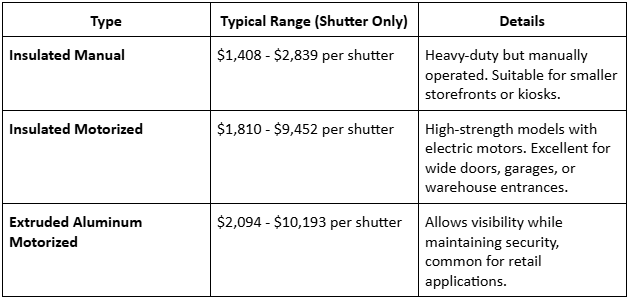
Here’s a general look at how much roller shutters typically cost, depending on their size, operation type, and material. Prices below include both materials and average installation fees in the U.S. market.
READ: Are Rolling Shutters Worth It?
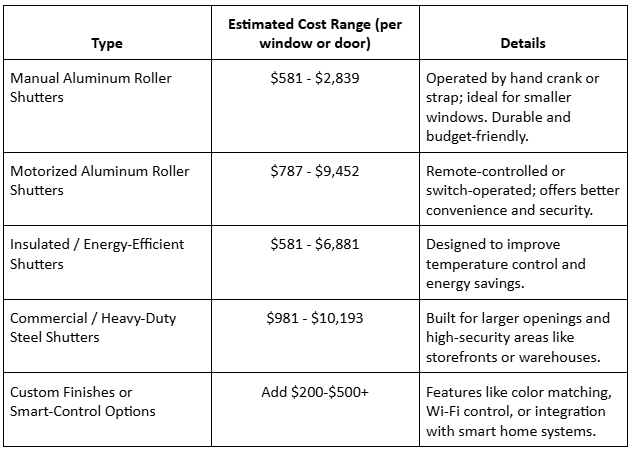
Tip: Prices for rolling shutters can vary based on region, installation complexity, and added features like wind locks, sensors, or backup power. The best way to get an accurate estimate of the price is by requesting a customized quote from a trusted supplier.
What Affects the Cost of Roller Shutters
Not all roller shutters are the same, and there is a good reason for that. Some of these key factors determine the final price, from the size and material of the shutter slats to whether it is manual or motorized. Knowing these details will help you get a better idea of where the biggest cost differences are coming from and what features are worth paying for.

READ: Why Residential Rolling Shutters Are a Smart Investment
Size and Coverage Area
Cost is the obvious first factor when determining the cost of rolling shutters. Bigger shutters require more material, longer guides and, if they’re automated, they would need stronger motors. All these factors can easily add to the rolling shutter cost. A small window shutter could be only a couple of hundred dollars, while a wide patio door or storefront can run a few thousand.
Quick tip: If you’re planning on installing shutters for multiple windows in your home or business, ask your local roller shutter dealer about package pricing. Ordering several units at once can sometimes lower your per-shutter cost.
Material and Build Quality
- Insulated Aluminum Slats:
Most popular & best value. Lightweight, corrosion-resistant, available in many strengths for Residential or Commercial use.
- Extruded Aluminum Slats:
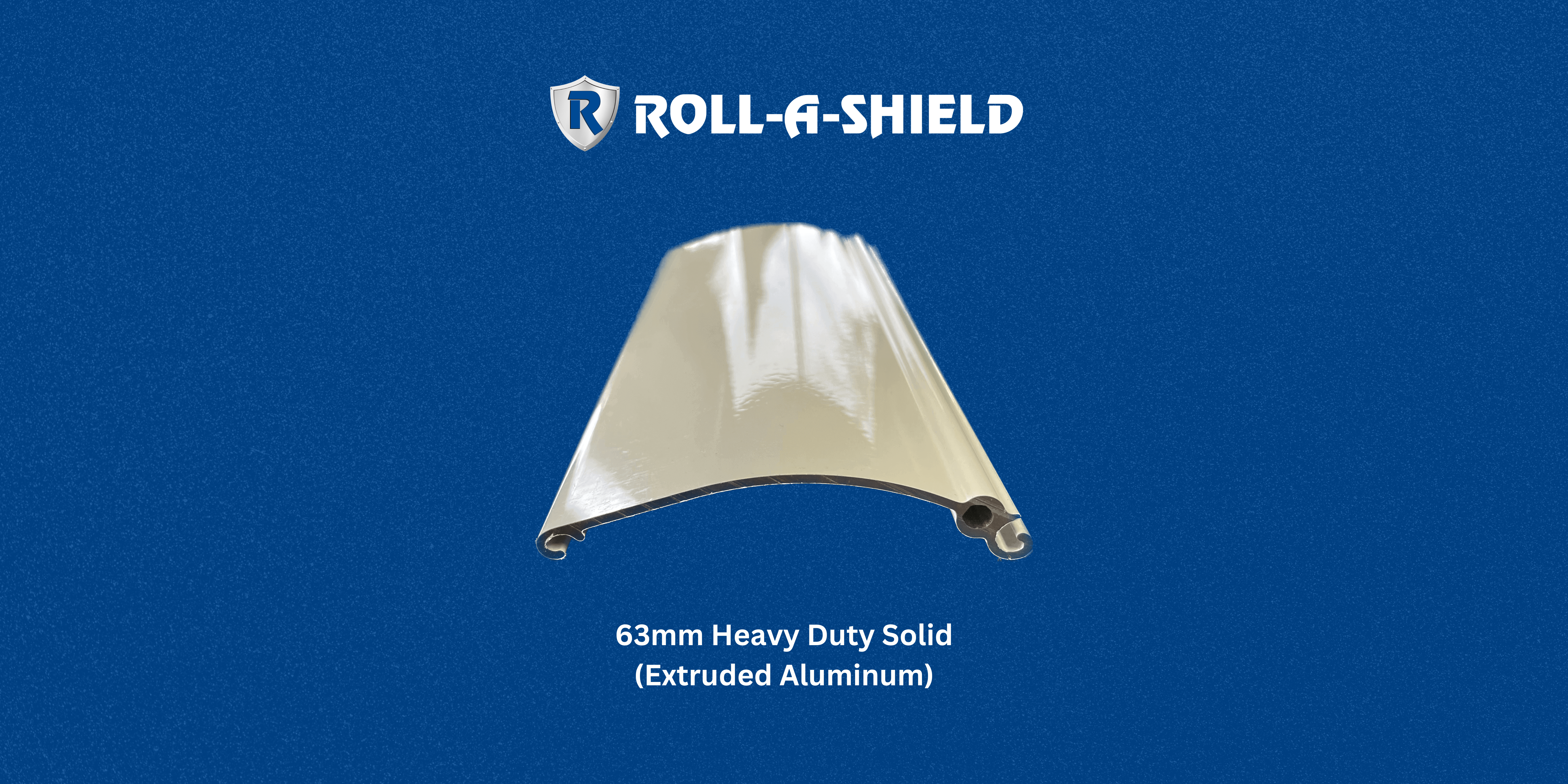
More secure and heavier duty. Ideal for businesses or high-risk areas. It is more expensive because it is stronger and heavier.
- PVC or Composite:
Less longevity, but budget-friendly options for smaller windows or areas not needing as much protection.
High-grade aluminum shutters present a good balance between strength and affordability, especially in areas with strong sun and occasional storms.
Manual vs. Motorized Operation
How you open and close your roller shutters affects both convenience and cost.
- Manual systems
Manual-operated shutters are usually cheaper but need more effort to operate, especially with larger openings.
- Motorized Shutters:
TElectric motors with a switch, remote, or smartphone app power these shutters. They add comfort, accessibility and better overall security but generally add $200 – $6,000 per shutter to the price, depending on motor size and features.
If you’re planning long-term or installing rolling shutters on multiple windows in your property, motorization can be a smart investment in convenience and safety.
Insulation and Slat Design
The type of slat or curtain design can influence both performance and cost.
Insulated slats filled with polyurethane foam or designed with thermal breaks help regulate indoor temperature and reduce noise. Insulated slats are typically more affordable than heavy-duty extruded aluminum options, yet they still offer great thermal and noise reduction benefits.
In short: You get solid insulation performance and energy savings without the higher cost of premium aluminum slats.
Installation and Labor Costs
Installation is more than just adding a rolling shutter to your property; it also involves taking site measurements, surface preparation, and sometimes wiring (if you opt for motorized shutters).
Labor rates will also vary by region and project type (new build vs. retrofit). The cost of rolling shutter installation can also increase for complex installations, which involve things like recessed housings or hidden boxes, making additional labor and materials a requirement.
Tip: Always ask whether your quote includes product and installation costs to avoid surprise fees.
Customization and Added Features
Custom color finishes, wind locks, backup battery systems, or integration with smart home technology can enhance your shutter’s functionality, but they can also increase the cost of having your rolling shutters installed.
While these features aren’t essential and necessary for everyone, they’re often worth it for homeowners seeking convenience and a tailored appearance.
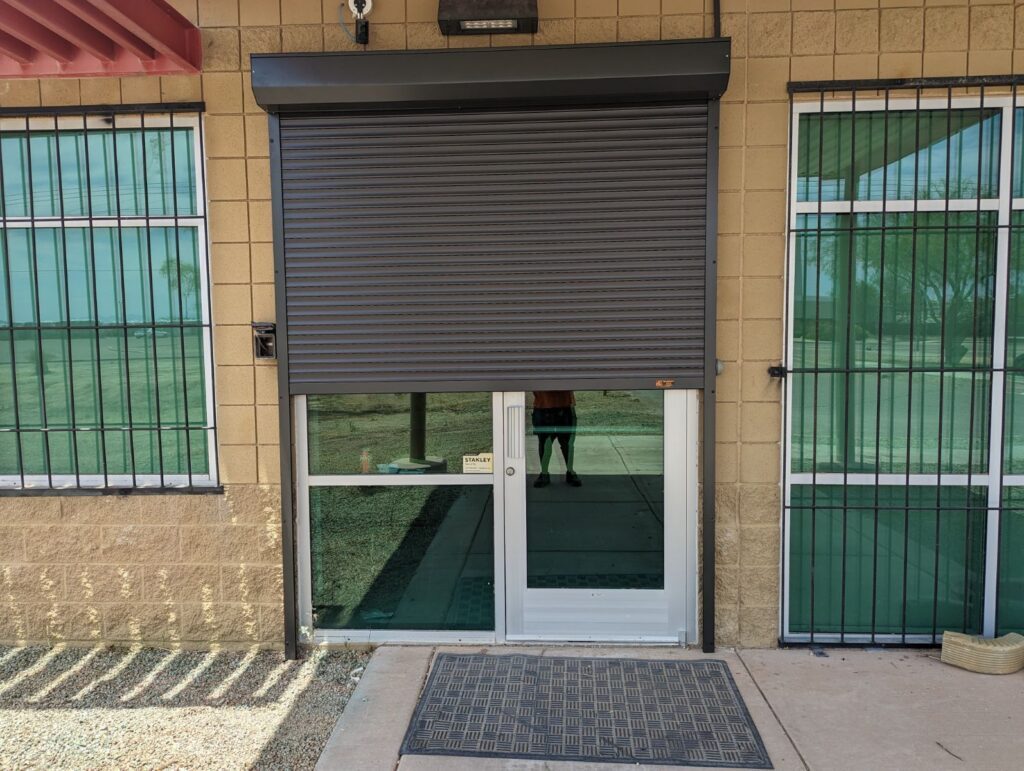
Cost Drivers at A Glance

READ: Security Shutters…the BEST Crime Deterrent
Typical Price Ranges by Use Case
Now that we’ve covered what features and factors affect the cost of roller shutters, let’s look at some realistic pricing examples.
While exact prices for rolling shutters vary depending on materials, dimensions, and installation complexity, the following roller shutter price ranges can give you a strong idea of what to expect for different shutter types and purposes.
Residential Roller Shutters
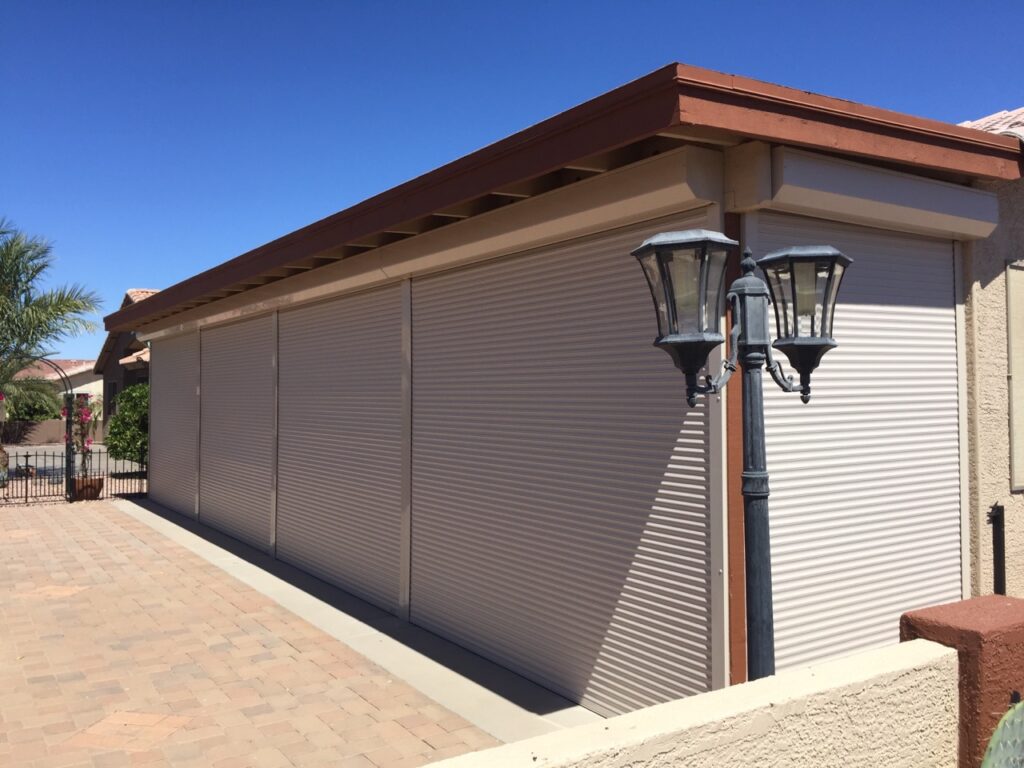
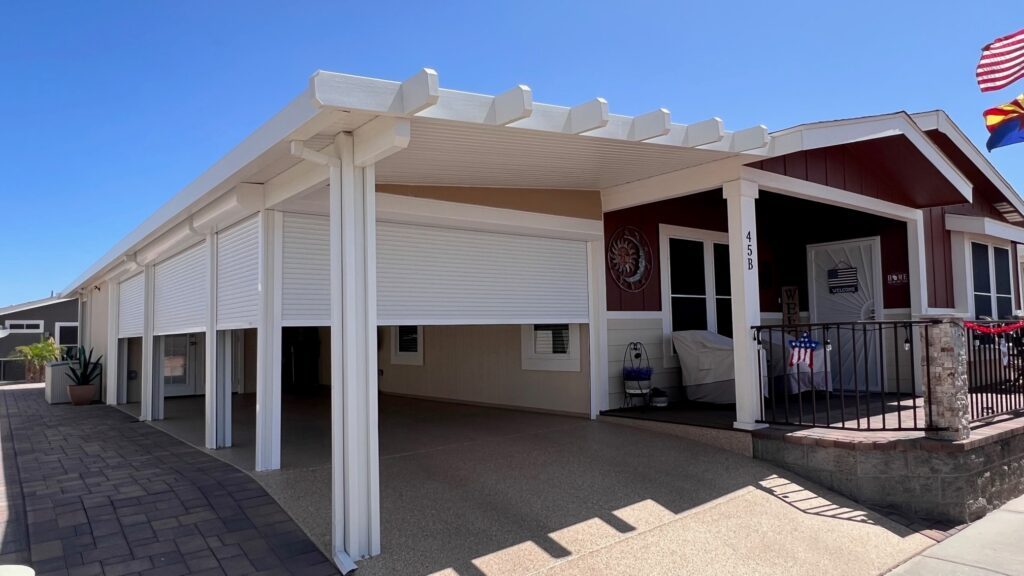
For most homeowners, roller shutters are installed to improve security, comfort, and insulation on windows, patios, or sliding doors. Aluminum is the most common material for residential use since it’s lightweight, corrosion-resistant, and durable in hot climates like Arizona’s.
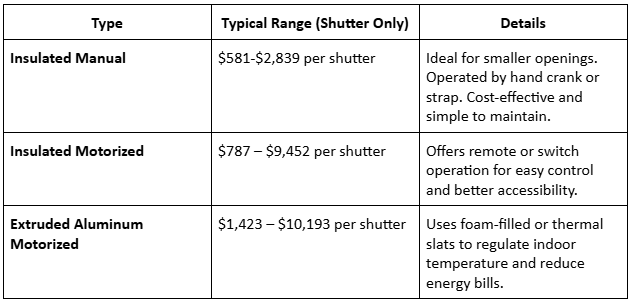
Example:
A standard 3 ft × 5 ft window with an insulated manual shutter typically costs around $1,163, while upgrading to an insulated motorized version brings the price to about $1,294, depending on the motor type and finish.
READ: Why Commercial Rolling Shutters Should Be Customized For Your Business
Commercial Roller Shutters
Commercial shutters are often built for security and durability, protecting storefronts, service counters, or warehouses. These are typically made of thicker-gauge aluminum or steel and can be either manual or fully motorized.
Example:
A single retail storefront shutter (6 ft × 7 ft) could cost around $2,575 installed, depending on the motor size and whether the shutter includes vision panels.
Motorized vs. Manual: What the Price Difference Really Means
The price difference between manual and motorized shutters usually ranges from $300 to $600 per unit. This depends on factors like motor capacity, brand, and control system. That extra cost includes the motor, wiring, switches, and remotes. For larger or hard-to-reach shutters that are common in commercial properties, motorization is not just a luxury; it is a practical feature that saves time and effort and improves accessibility.
Tip: If you’re installing multiple shutters on your property, think about motorizing all of them at the same time. Many suppliers provide discounts for buying multiple units together.
READ: The Future of Home Protection: Rolling Shutter Solutions
Custom and Smart-Control Options
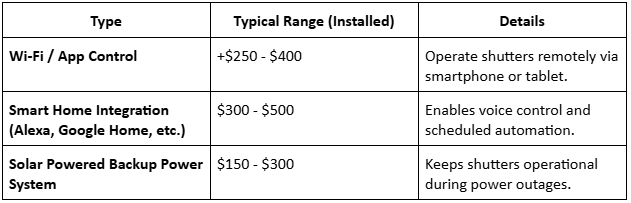
Modern roller shutters can integrate with smart home systems or security networks for real-time control through smartphones or voice assistants.
These added features typically increase total cost by $200–$500 per shutter, but they also elevate convenience and peace of mind.
How to Get Accurate Quotes (and Compare Them Smartly)
Prices can vary widely between suppliers, so it’s worth taking a careful approach when requesting quotes. Here’s how to make sure you’re comparing fairly:
-
- Provide clear details
When you request a quote, a professional supplier should always provide an itemized breakdown of materials, labor, and accessories. That means your quote shouldn’t just say “roller shutter system — $900.” Your quote should include the following details: Size and type of each shutter, material, operation type, brand or model of motor (if applicable), installation and labor cost, optional add-ons (color finishes, remotes, sensors, smart home integration), and warranty details. This transparency helps you see exactly what you’re paying for and avoids surprise costs later.
- Ask what’s included
If you’re collecting multiple quotes from several reliable rolling shutter companies, make sure you’re comparing the same product specifications for each of them. A quote for a manual aluminum shutter isn’t equivalent to one for a motorized steel shutter with insulation, even if the price difference looks huge. Instead of focusing solely on price, evaluate build quality, motor reliability, and warranty coverage.
- Look beyond the number
It’s tempting to go for the cheapest quote, but that can cost more in the long run. If a quote feels “too good to be true,” it usually is. Low bids often exclude essential items like wiring, insulation, or a proper warranty. Some even use lower-grade materials that wear out faster or fail under pressure in order to sell for cheap and still profit from it.
- Ask for a Site Visit or Measurement Check
For the most accurate quote, schedule a site visit.
Measurements taken by rolling shutter installers and professionals ensure a perfect fit and reveal any installation challenges such as uneven openings or limited headroom that might affect cost you weren’t expecting. This step can prevent costly mistakes, especially for custom or motorized shutters.
- Provide clear details
Tip: Need a quote for your rolling shutter project? Get a FREE CONSULTATION when you call us at (480) 921-0200 or visit www.rollashield.com to explore a custom rolling shutter solution for your home or business.
Read our Google reviews here.
Quick Answers to Common Rolling Shutter Questions
Q: How much do roller shutters usually cost?
Prices typically range from $600 to $1,408 per window, depending on the size, material, and operation type. Larger doors or storefront shutters can go higher, especially for motorized or insulated options.
Q: Why do some shutters cost more than others?
The biggest cost factors are size, material, and motorization. Steel and high-grade aluminum shutters cost more than lightweight options, and adding a motor, insulation, or smart controls increases the total price.
Q: Are motorized shutters worth the extra cost?
For most homeowners, yes. Motorized shutters add convenience, security, and accessibility, especially when controlling multiple units. They also pair well with smart home systems for added comfort and energy savings.
Q: Can I get an exact price before installation?
Yes, but only with an on-site or detailed quote. Reputable companies measure your openings, check electrical access, and factor in labor before giving a total price. This ensures there are no surprise fees later.
Q: How can I tell if a quote is fair?
Compare at least two to three quotes, and make sure each one includes the same details—size, materials, labor, and warranty. A fair quote balances quality, reliability, and after-sales support, not just the lowest number.
Q: What factors influence the cost of roller shutters?
Costs depend on size, material, insulation, customization, and whether the shutters are manual or motorized.
Q: Are motorized shutters more expensive than manual ones?
Yes. Motorized shutters cost more upfront but offer added convenience and technology features.
Q: Do insulated shutters cost more than non‑insulated shutters?
Yes. Insulated shutters typically cost more because they include extra material that improves energy efficiency.
Q: Can customization affect the price of roller shutters?
Yes. Custom sizes, colors, finishes, and additional features can increase the overall cost.
Q: Should installation costs be included in a budget?
Yes. Professional installation ensures proper fit and performance and should be included in the total cost estimate.
Q: Are roller shutters a long‑term investment?
Yes. They provide security, comfort, energy savings, and durability, making them a valuable long‑term addition for many properties.
Conclusion
The cost of rolling shutters can vary, but the most important thing is to find a system that meets your needs, protects your property, and adds long-term value. Whether you’re securing a storefront or improving your home’s energy efficiency, knowing the factors that influence price helps you make a smart investment instead of just spending more.
For over 40 years, Roll-A-Shield has helped homeowners and business owners protect what matters most with custom-built rolling shutters made for security, comfort, and convenience.
If you’re ready to learn what your project would cost, our team can provide a free, no-obligation quote tailored to your property’s exact size, style, and setup.
Contact us at (480) 921-0200 or visit www.rollashield.com to explore a custom rolling shutter solution for your home or business.