
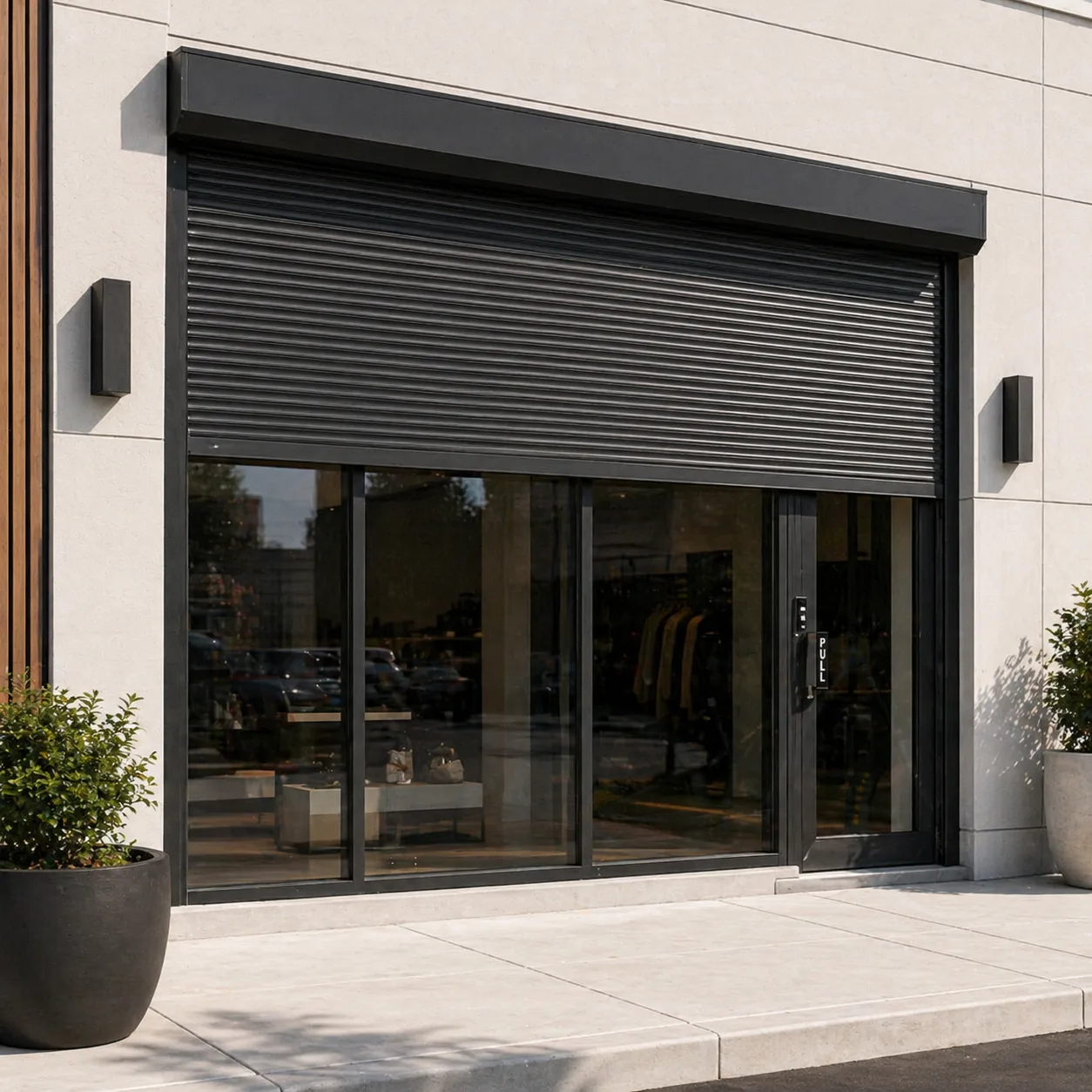
Metro Phoenix Storefront Security
Storefront security shutters for Metro Phoenix businesses
Roll-A-Shield builds storefront security shutters for the openings a retail, restaurant, or commercial business has to leave exposed: display glass, entry and exit doors, service and pickup counters, and drive-through and walk-up windows.
Closed, they put a solid aluminum barrier across the opening after hours. Open, they roll up out of sight so the storefront trades normally. Every shutter is manufactured here in Arizona for the exact opening it protects, and installed by our own local crews across the Valley.

Storefront Security
What are storefront security shutters, and why do Phoenix businesses use them?
Storefront security shutters are exterior aluminum shutters that roll down over an opening from a slim box above it, and roll back up out of sight during business hours. Closed, they put a solid barrier over the glass, so deterrence happens at the opening rather than after someone is already inside. That is what makes them effective as smash and grab window protection.
They earn their place the rest of the year too: controlled access on counters and pass-throughs, sun and glare kept off west-facing retail glass, and cover from monsoon dust and wind-driven debris. Roll-A-Shield has built custom rolling shutters across Metro Phoenix since 1979, sizing each one to the exact opening and installing it with our own crews.
Local. Experienced. Trusted.
Proudly manufacturing in Phoenix, AZ since 1979. Thousands of homeowners and businesses across Metro Phoenix trust Roll-A-Shield to protect what matters most.
Two Ways to Close an Opening
Solid or perforated storefront shutters
Both are extruded aluminum roll down shutters that close the opening completely. The difference is what the sidewalk sees after you lock up: solid conceals the space, perforated rolling shutters keep it visible.
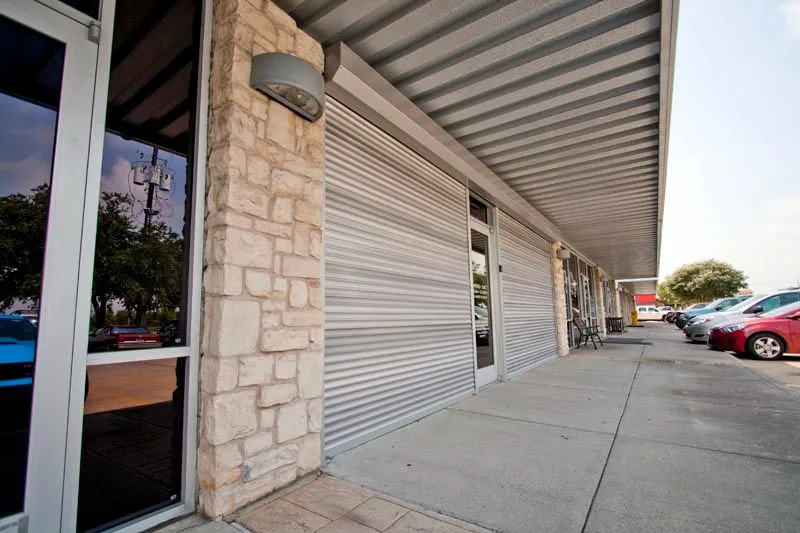
Solid storefront shutters
The 63 mm HD solid slat closes the opening completely, so there is no visibility into the space once you are shut. It is the strongest barrier we build and the right call for Metro Phoenix storefronts holding high-value inventory, for openings on quiet after-hours blocks, and anywhere you want the interior concealed as well as protected. Common on retail frontage, dispensaries, and rear service and delivery doors across the Valley.
See the 63 mm HD solid slat →
Perforated storefront shutters
The 63 mm HD perforated slat closes the opening with the same extruded aluminum strength, but the slat is vented, so displays, signage, and interior lighting stay visible from the sidewalk after you lock up. Daylight and airflow pass through as well. It suits Metro Phoenix retail and restaurant frontage on walkable blocks and in shopping centers, where a visible window keeps working for you overnight and a patrolling eye can still see into the space.
See the perforated extruded slat →Finishes
Powder-coated finishes for commercial openings
Every rolling shutter is powder-coated in one of seven standard colors, with the slats and guide rails finished to match across the full assembly. Lighter tones reflect more heat on exposed glass, which matters most on west and south-facing storefront frontage. The powder coat is the protective finish on the aluminum, not a surface treatment applied after installation.
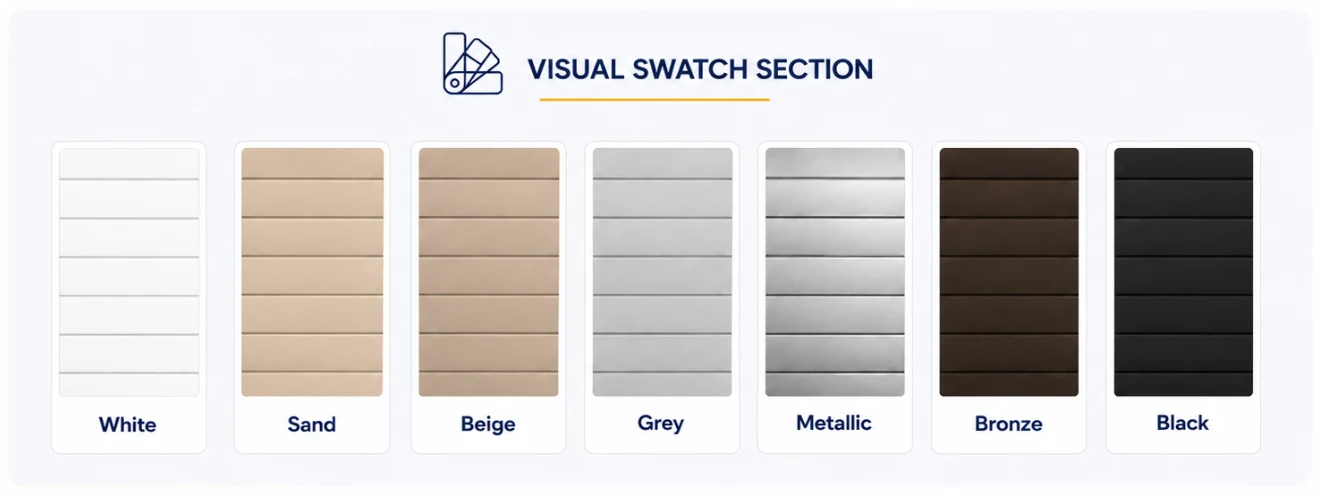
On-screen colors are close approximations. Your specialist can show you physical samples and confirm the exact finish for your building during your free on-site estimate.
Choose Your Slat
Four slat profiles, two built for storefronts
The slat is the heart of the shutter. We build four profiles so the roll up security shutters on your building are matched to the openings they cover. The two extruded profiles are the commercial workhorses. The two insulated profiles cover smaller openings and the residential side of a mixed-use property.
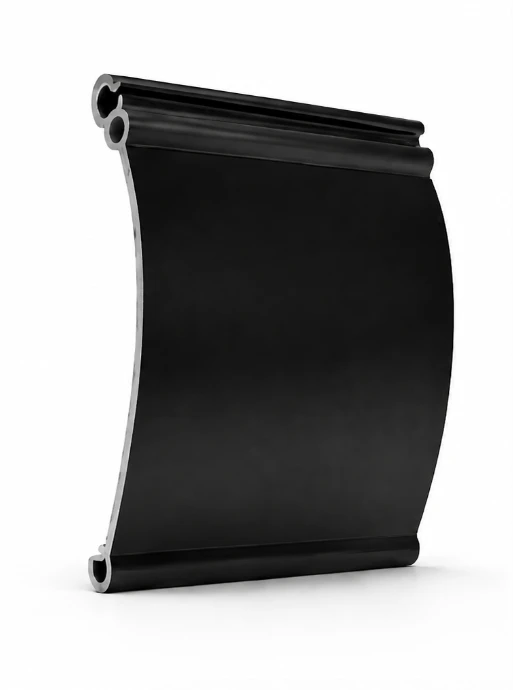
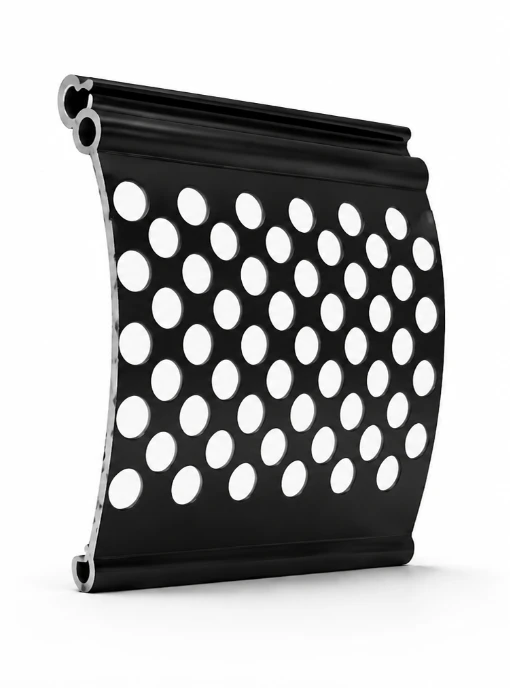
63 mm HD Solid
Single-wall extruded
The maximum-security profile for storefronts and commercial openings, solid extruded aluminum with full concealment after hours, on openings up to about 18.5 ft wide.
- Solid extruded aluminum
- Highest security level
- Full after-hours concealment
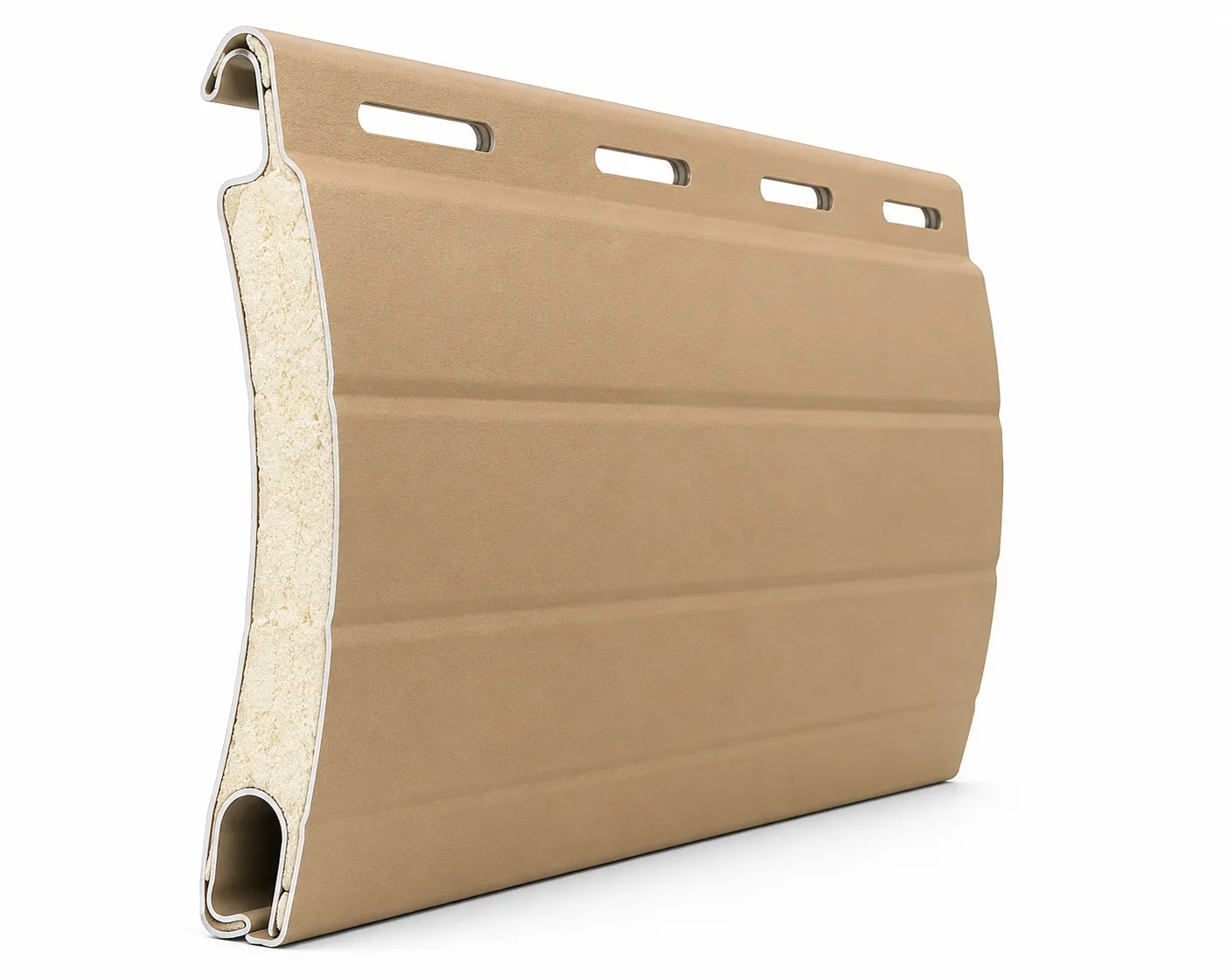
63 mm HD Perforated
Vented single-wall
The same extruded strength for storefronts that need to stay secure while keeping displays, daylight, and airflow visible through the closed shutter.
- See-through when closed
- Airflow and daylight
- Same extruded strength
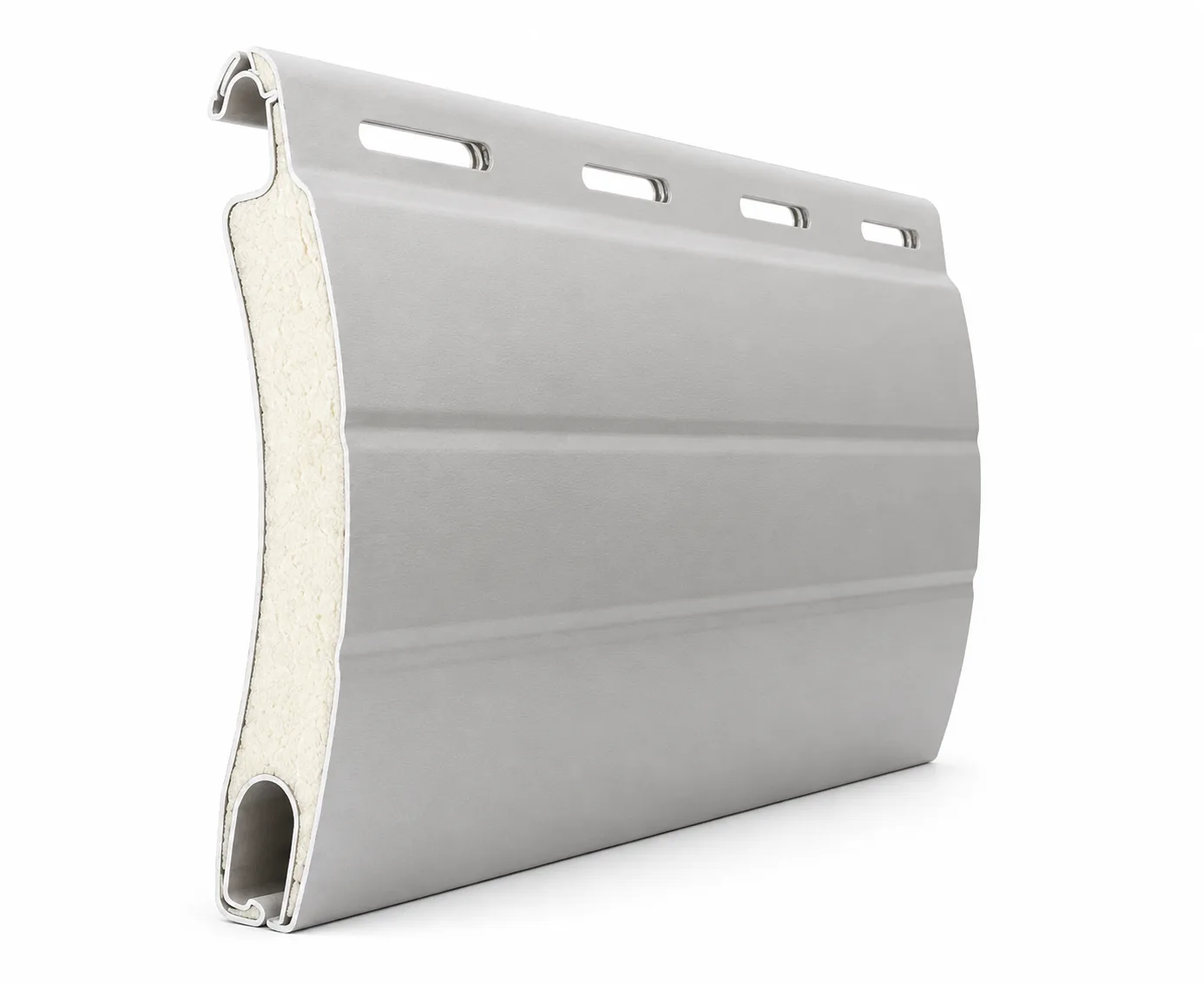
55 mm Insulated Slat
Standard foam-filled
A foam-filled profile for wider openings up to about 18 ft, used on patio and office glass and on the residential side of a mixed-use property.
- Strong thermal and noise insulation
- Handles wide openings
- Motorized operation
38 mm Insulated Slat
Mini foam-filled
The compact foam-filled profile for smaller openings up to about 12 ft wide, and the profile that supports every operator we offer.
- Foam-filled thermal and noise insulation
- Lightweight with a compact box
- Manual, spring, battery, or motor
Where Storefront Shutters Go to Work
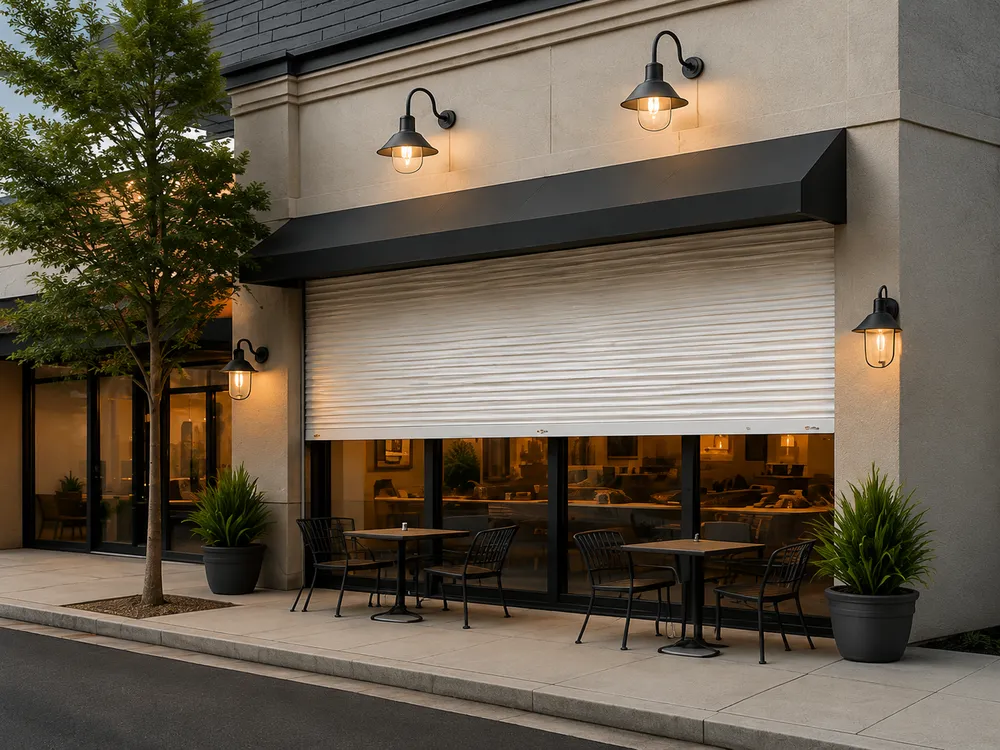
One product, many commercial openings
A storefront is rarely one opening. Most Metro Phoenix businesses have display glass out front, a door staff use after close, and a counter or window that needs to close on its own schedule. Commercial security shutters adapt to each one.




Operation & Control
Open at 9, closed and locked by 9
How a shutter gets operated matters more on a storefront than anywhere else, because it happens twice a day, every day, usually by whoever is closing. These are the operation and access control options we offer on motorized security shutters.
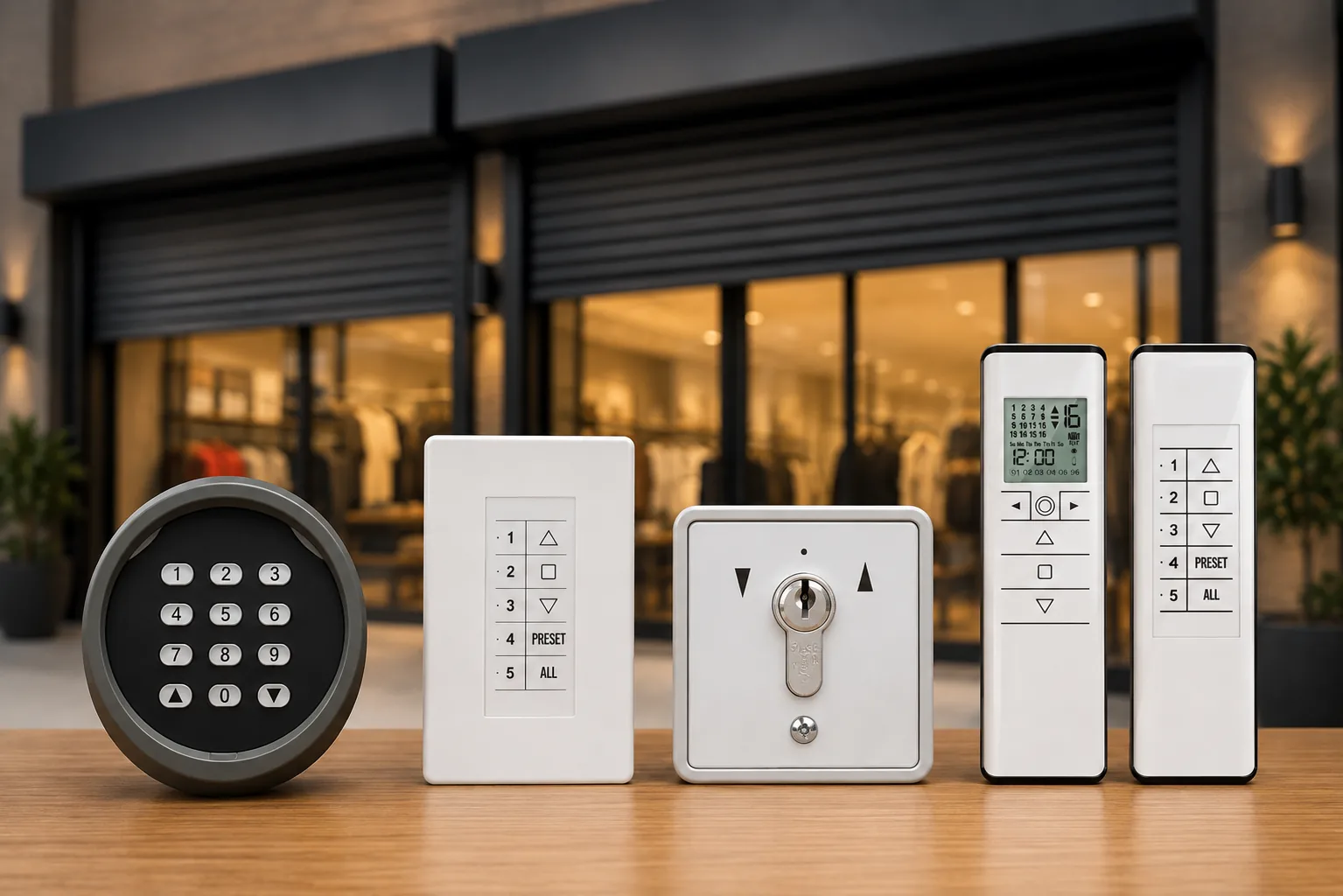
Key switches and wall switches
Put the control at the opening where staff actually use it. A wall switch beside the storefront lets anyone on shift raise and lower the shutter, and a keyed switch limits that to whoever carries the key. On a business with rotating staff or a shared entrance, keyed control is how you decide who can open and close the opening.
See motors and controls →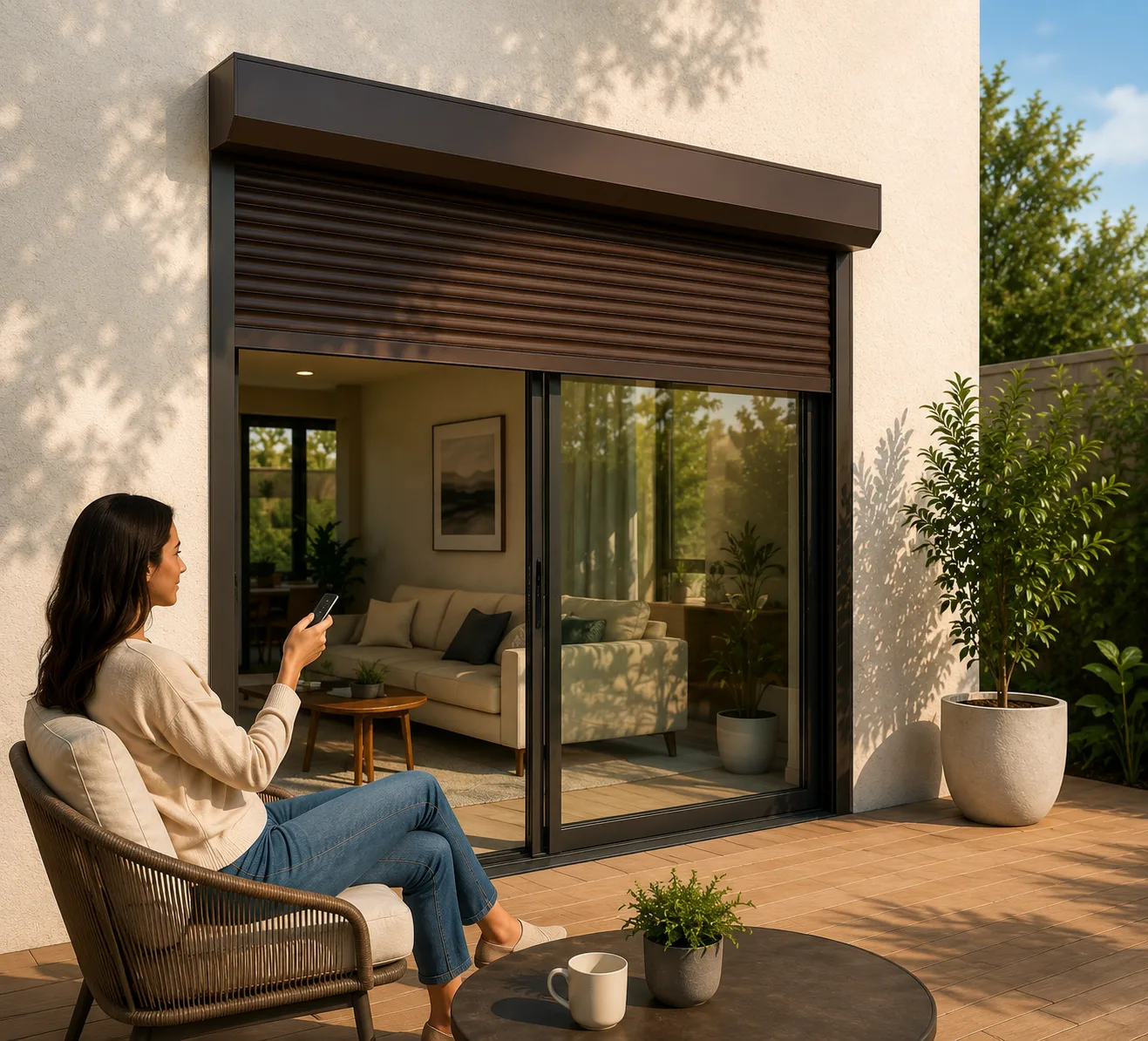
Scheduled and smart control
Set the shutters to close at the same time every night so closing does not depend on someone remembering. Run them from a phone when you are not on site, or tie them into controls you already use. Scheduling also lets you drop the shutters on west-facing glass through the hottest part of the afternoon and raise them again before close.
See smart control options →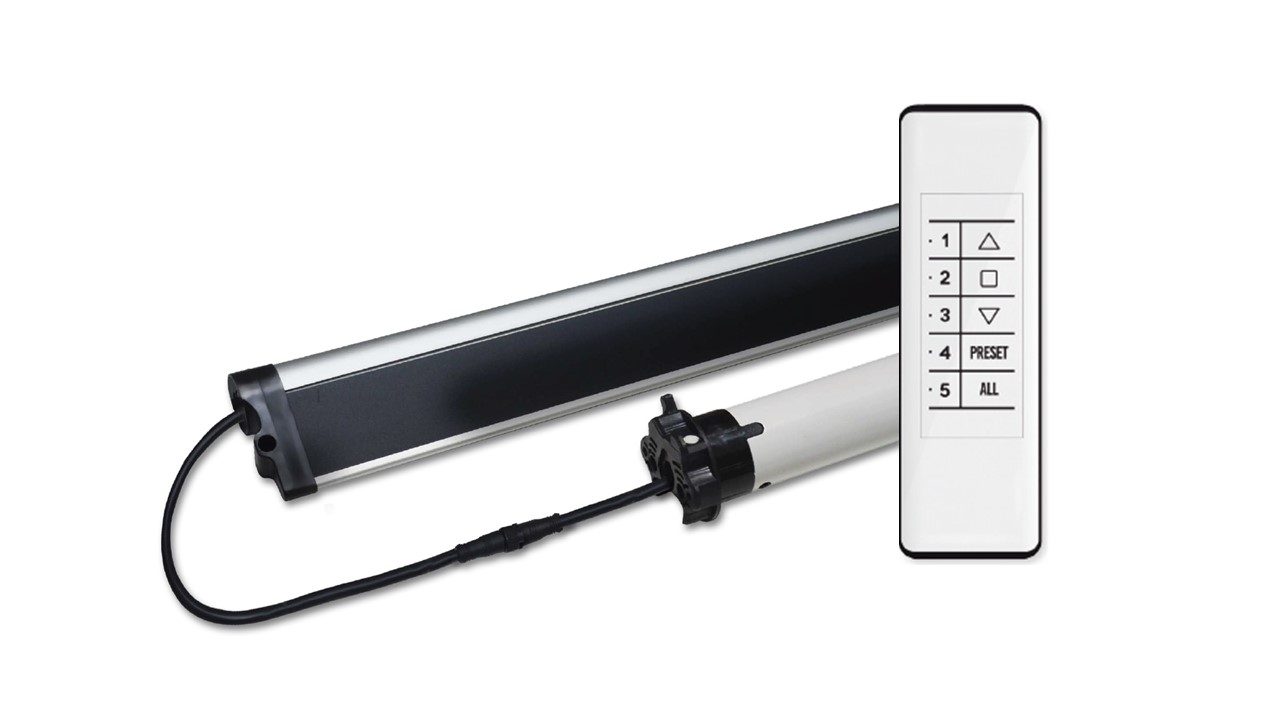
Solar and battery motors
Solar and battery-powered motors avoid running new wiring, which matters on leased space where you cannot open up walls and on older buildings where the panel is already full. They also keep operating through a power outage, so a storefront never sits open because the power went out at close.
See motor and power options →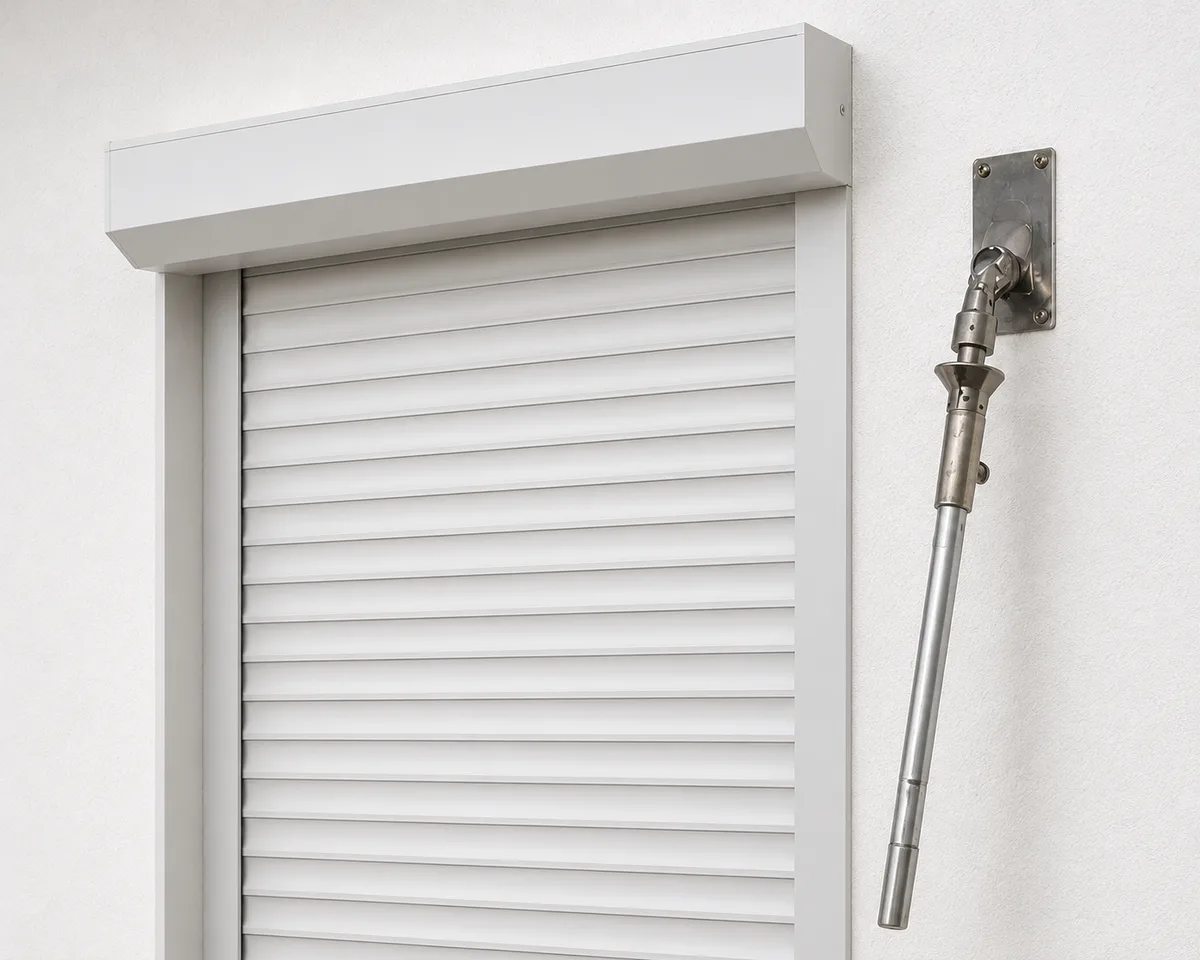
Manual operation and override
Manual operation is available on the right slats if you would rather have no motor at all. And motorized shutters can include a manual override, so an opening is never stuck open or closed. On a storefront that matters twice: you can still secure the opening at close, and you can still open for business the next morning.
See operation accessories →How It Works
Simple process. Custom results.
Request a Quote
Tell us about your business and the openings you need covered, and schedule your free on-site estimate.
On-Site Survey
A local specialist surveys each opening and the storefront system around it, then recommends the slat and operation that fit.
Custom Built
Your shutters are manufactured in Phoenix for the exact opening.
Professional Installation
Our own local crew installs and tests the finished system, and we can schedule the work around your business hours.
Financing available
Ask about current financing options during your free estimate and spread the cost of your rolling shutter project over time.
What Affects Price
What goes into your storefront shutter price
Because every shutter is custom-built, there is no one-size roll down security shutters cost. These are the five factors that move the number, and why we quote your exact price after seeing the openings.
Commercial pricing: commercial and storefront openings are quoted separately from residential windows, because they use the heavier extruded slats and span wider openings. Your exact price comes from a free on-site estimate. See our full cost breakdown for more detail.
Read the Cost Guide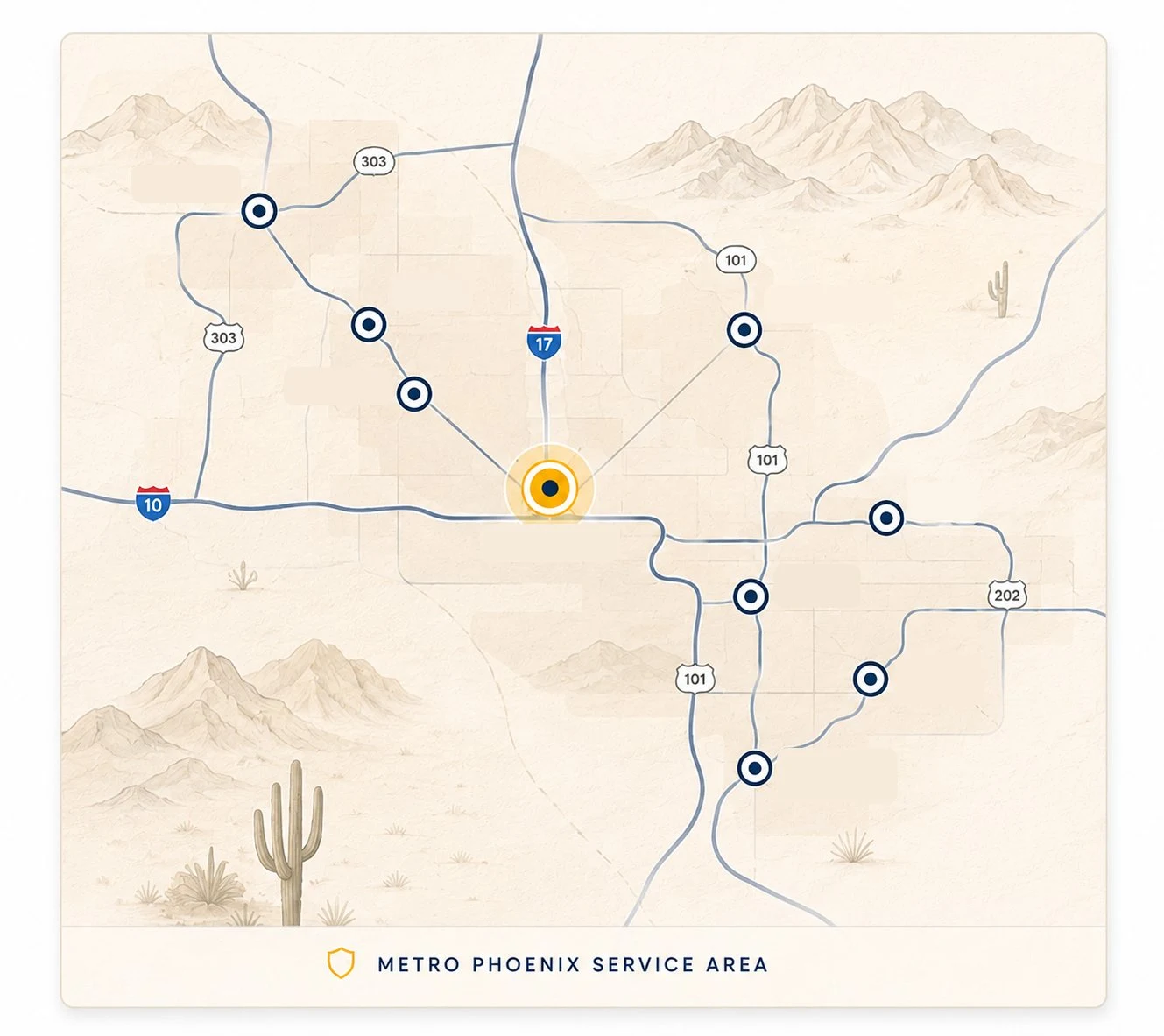
Proudly Serving
Metro Phoenix
We install commercial rolling shutters across the entire Valley: retail corridors, downtown and midtown storefronts, strip and neighborhood centers, and light industrial and warehouse districts. Same local crews, whether the job is retail security shutters on a single counter or a full row of storefront glass. Storefront work is part of our wider Metro Phoenix rolling shutters service.
What Our Customers Say
Trusted by businesses and neighbors across Metro Phoenix
“Absolutely first class business in every respect. Highly recommend the team there. Never had a disappointment in 15+ years as a customer.”
David G.“Roll-A-Shield did a great job, from start to finish. A sales rep gave me a quote for two shades. I ended up only going with one, but was not pressured, at all, to also get the other shade. Pricing was fair, and they delivered exactly what I asked for in the exact date they said they would complete the job. Pleasure to work with everyone I came in contact with.”
Ralph C.“We updated our roller shields. We had the first set over 35 years and have updated the windows and wanted the new roller shields also. Very happy with the new look. We feel much safer in our home with them and it really helps with the electric bills.”
Richard C.★★★★★ 4.9 average across 211 Google reviews. Read them on Google →

Ready to secure your storefront?
Schedule a FREE on-site estimate with a local rolling shutter specialist from Roll-A-Shield.
Keep Exploring
Guides, comparisons, and deeper reading
This page is your starting point. Follow the links below to go deeper on the decisions that come up on a commercial project.
The Full Commercial Range
Every commercial opening we cover, from storefronts and counters to warehouses and offices.
See commercial shutters →Rolling Shutters vs. Security Bars
How a rolling closure compares with bars and grilles on a commercial opening.
Compare options →How to Choose Security Shutters
A step-by-step look at matching slat, operation, and mounting to your opening.
Read the guide →How Much Do Rolling Shutters Cost?
The factors behind a quote and how they change on a larger opening.
See the cost guide →Common Questions
Your questions, answered.
Answers to what Metro Phoenix businesses ask us most about storefront security shutters, from smash and grab protection to motorized access control and cost.
01What are storefront security shutters, and how do they work?
Storefront security shutters are exterior aluminum shutters that close over an opening from a slim box mounted above it. The slats link together into a curtain that rides in a guide rail on each side, so the curtain rolls down over the glass to close and rolls back up into the box to open. Closed, it is a continuous aluminum barrier across the full opening, held in the rails on both edges. Open, the box sits above the storefront and the glass is completely clear. Most commercial units are motorized and operated from a switch at the opening.
02How do commercial security shutters differ from residential ones?
The idea is the same, but the build is specified differently. Commercial security shutters usually use the 63 mm extruded aluminum slat rather than a foam-filled residential profile, because extruded construction gives the strongest impact resistance and is the only family that accepts end retention. The motors are specified differently too: commercial-grade motors are rated for roughly 10 to 50 non-consecutive cycles per day, which matters on a storefront that opens and closes every trading day rather than a bedroom window that moves twice a season.
03How do shutters provide smash and grab window protection?
Smash and grab depends on the glass giving way in seconds. A closed shutter means the glass is no longer the outer surface: the aluminum curtain is, and it is held in a guide rail down both edges rather than sitting loose in the opening. Anyone working on the front of your business has to get through a metal barrier in the open, in view of the street, before the glass is even reachable. That changes the time and noise involved, which is the part that makes an opportunistic attempt not worth starting.
04We already have alarms and cameras. Is smash and grab protection still worth adding?
Alarms and cameras are detection and evidence. They tell you something happened and help afterwards, but they act once someone is already through the glass. A shutter is the other half of that: a physical barrier that works before entry rather than after it. Security film is closer in intent, though it stays bonded to the glass you are trying to save. Most businesses that add shutters keep the alarm and the cameras. The shutter is what buys the time those systems need.
05What stops someone forcing a shutter open? How does storefront window security actually hold?
On a motorized unit the motor holds the curtain down, so there is nothing to grab and lift, and many motors include an anti-lift or auto-lock feature so the curtain cannot be shoved up from outside. Manual units take a positive lock instead: a slide, pin, key, or thumb lock at the bottom bar, mounted on the box side or the back side depending on how the unit is fitted. The guide rails carry the rest, holding both edges of the curtain so it cannot be levered out sideways.
06What makes anti theft shutters different from an ordinary rolling shutter?
End retention is the difference. Without it, a curtain can be popped out of its track under enough force. With it, screw heads at each curtain joint ride in a dedicated second channel inside the guide rail and are blocked by the channel teeth, so the curtain cannot be pushed out of the track. It comes in two levels, every slat or every other slat. We generally recommend every other slat, which balances security against friction and quieter operation, and specify every slat for maximum-security openings and wide spans. End retention is available only on the extruded slats. No foam-filled slat can take it.
07How do shutters handle storefront glass protection during monsoon season?
From roughly July through September the Valley gets microbursts, blowing dust, and haboobs that drive grit and debris at glass. A closed shutter puts a solid aluminum layer in front of that glass, and because it is operated from inside you can close it before the storm arrives rather than after. The same barrier is why the extruded profiles are also used on high-wind openings. On a storefront the practical benefit is that a single unit covers both the security job at night and the storm job in season.
08Is storefront window protection only useful after hours?
No. Because the shutter sits outside the glass, it stops sunlight before it reaches the window rather than filtering it once the heat is already inside the room. On west and south-facing frontage that is the difference between a retail floor that fights its glass all afternoon and one that does not. You do not have to close fully, either. A partially lowered shutter shades the upper glass while the entrance stays open and trading. Lighter powder-coat finishes reflect more heat than darker ones.
09What do retail businesses usually choose in retail security shutters?
Retail splits from warehousing here. A warehouse or a business holding stock out of sight generally wants solid slats and full concealment once closed. Retail storefronts more often choose perforated, because the display, the signage, and the interior lighting keep working from the sidewalk after you lock up, and a passing patrol can still see into the space. If the concern is that a lit display invites attention rather than deters it, solid is the safer call. It is a judgement about your frontage and your block, and both are the same extruded slat underneath.
10How much can you see through perforated rolling shutters?
Enough to read a lit display from the sidewalk. Perforated rolling shutters are a single-wall extruded slat manufactured with openings through the face, so light and sightlines pass at all times, including when the shutter is fully closed, along with airflow. That is worth separating from vented slats, which is a different feature: vented foam-filled slats let light through the gaps between slats when the shutter is partly open and go dark once it locks fully closed. Perforated costs more than the solid version of the same slat, because of the extra material and paint work.
11Are motorized security shutters worth it for a storefront?
On a storefront, usually yes. The opening gets closed and opened every trading day, generally by whoever is on shift, and a motor takes the effort and the technique out of that. Commercial motors are specified for that duty. Wider and heavier curtains are motorized as a matter of physics rather than preference, since a manual operator is limited by curtain weight. For outages, a motorized unit can be built with a manual override so it can still be operated by hand, and solar or battery motors keep running when the building has no power.
12How do I control who can open and close security shutters for storefronts?
Several ways, and the choice is worth making early because it decides the build. A heavy-duty outdoor key switch, flush or surface mounted, limits operation to whoever carries the key, and it can be paired with an interior toggle switch on the same unit so staff inside can work it without a key. A wall-mounted keypad remote uses a code, which suits rotating staff. A key fob handles drive-up access. Note that hardwiring a key switch makes it a wired unit, which rules out the remote and key-fob path, so pick the access model before the shutter is built.
13What is the difference between roll up security shutters and roll down shutters?
Nothing. They are the same product described from opposite ends of the same movement. A roll up security shutter is named for how it opens, a roll down shutter for how it closes, and both describe a slatted aluminum curtain that stores in a box above the opening and travels vertically in side rails. You will also see rolling shutter, roller shutter, and security shutter used for it. What actually differs between units is the slat, the operator, and whether end retention is specified, not the name.
14What is involved in installing commercial roll up shutters?
Measuring first, then mounting the box above the opening and fastening the guide rails to each side, plumb and square. Motorized units also need power run to the motor and the controls paired. The mounting surface changes the method: block and stucco take different anchors, and on an aluminum-framed glass storefront the fastening has to land on structure that can carry the assembly rather than on the glazing system alone. Permit requirements vary by municipality and by scope, so confirm with your local jurisdiction before work begins. We can usually schedule around your business hours.
15How wide an opening can commercial roll down shutters cover?
It depends on the slat, and the ceiling is a real engineering limit rather than a preference. The 63 mm extruded profiles, solid and perforated, cover the widest commercial spans, to roughly 18.5 ft. The 55 mm insulated slat runs to about 18 ft and is motorized only. The 38 mm insulated slat suits smaller openings to about 12 ft and is the profile that accepts every operator we offer. Height, curtain weight, and box size all factor in alongside width, so a very wide and very tall opening is assessed as a whole.
16Can roll down shutters for windows be retrofitted to an existing storefront, including leased space?
Yes, retrofit is the normal case rather than the exception, and units are built to the opening you already have instead of the opening being changed to suit the shutter. Exterior mounting gives the strongest barrier and is the usual commercial choice, and interior mounting within the reveal exists where exterior changes are restricted. On leased space your landlord or property manager is the final word, since a shutter mounts to the building and most leases treat that as an alteration needing written consent. Get it in writing first. Solar and battery motors avoid running new wiring, which removes a common objection.
17Are commercial storefront shutters custom-made, and what warranty do they carry?
Every order is custom-built, measured to your exact opening and made to those dimensions rather than trimmed down from a stock size. Roll-A-Shield is a local manufacturer, founded in 1979, and we fabricate each rolling shutter at our Tempe, Arizona facility before installing it with our own Metro Phoenix crews. We are licensed, bonded, and insured under Arizona ROC 342265. The warranty is the same for commercial and residential work: five years on shutter parts, five years on motors, two years on electronic components, and one year on installation labor, running from the date of installation.
18How long do storefront shutters last, and what maintenance do they need?
Commercial installations typically last 20 to 30 years or more. The slats are aluminum with a baked-on powder-coated finish that resists fading and corrosion, and the moving parts are few and simple. Maintenance is mostly keeping the guide rails clean and the moving components lubricated, which is a short annual job per opening. Grit is the thing to watch on a Valley storefront, since blown dust collects in the rails and a rail full of debris makes the curtain work harder than it should. A motor or a remote may need service across that lifespan.
19What determines roll down security shutters cost for a commercial opening?
Commercial and storefront openings are quoted separately from residential windows, because they use the heavier extruded slats and span wider openings. The size of the opening moves the number most, then the slat, whether the unit is manual or motorized, the controls and access hardware you choose, whether end retention is every slat or every other, and how complex the installation is. Color does not change the price, so the finish is a free choice. For Metro Phoenix projects we measure on site before quoting, because a shutter is built for one specific opening. Our cost guide covers the factors in more detail.
20Where can I get commercial rolling shutters near me in Metro Phoenix?
We serve the whole Valley, including Phoenix, Scottsdale, Tempe, Mesa, Chandler, Gilbert, Glendale, Peoria, and Surprise, and we cover more than storefronts: service counters, restaurants and bars, dispensaries, schools, offices, and warehouses. Installation is by our own local crews rather than subcontractors, which means measuring, manufacturing, installation, and warranty service all come from one Arizona company. See the full range of commercial rolling shutters, or call (480) 376-1629 to book a free on-site estimate.
Still have questions?
Call (480) 376-1629 or schedule a free estimate. A local specialist can help.
Request a Free Quote
Get your exact price today.
Every business has different openings. Our Metro Phoenix team will help you choose the right combination of slat, security, access control, and motorization for your storefront, and give you an exact price.
GET A FREE QUOTE