
Metro Phoenix Motorized Patio Shades
Patio shades and sun protection for Metro Phoenix homes and businesses
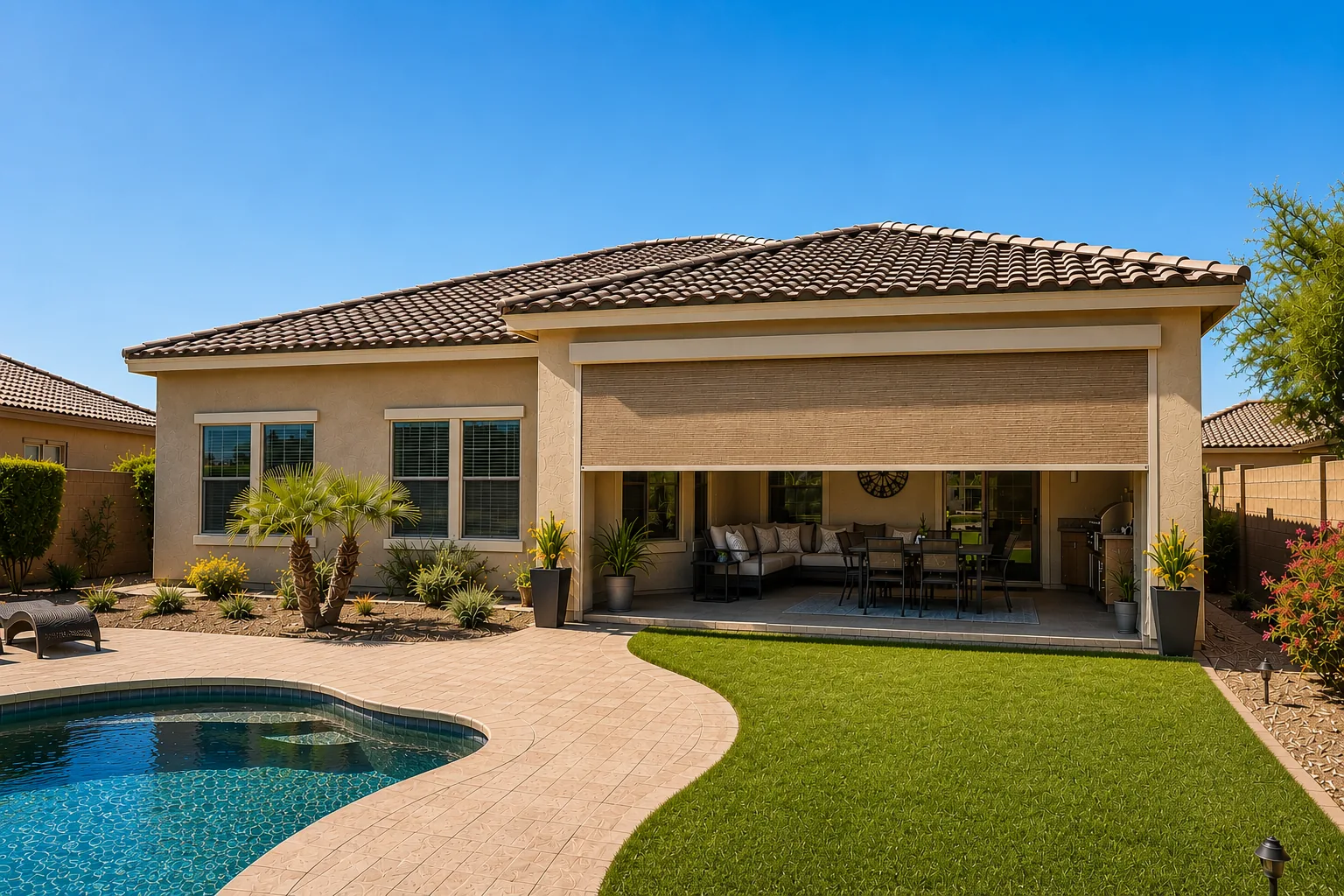
Motorized patio shades stop heat and glare on the outside of the glass, before either one reaches the room or the patio. The mesh rolls down over the opening and runs in side tracks that hold it taut, so you keep your view and your airflow instead of trading them for shade.
When you want the light back, the screen retracts fully into its housing and the opening is clear again. Roll-A-Shield custom-fits and installs retractable patio shades and rolling screens across the Valley for windows, sliding glass doors, covered patios, outdoor living areas, and storefronts.

Sun & Shade
How does exterior shade work on a Phoenix home?
Exterior shade works by stopping the sun outside the glass rather than after it has already come in. In Phoenix that job is done by motorized patio shades: exterior mesh that drops over west and south facing windows, sliding glass doors, and covered patios, cutting heat and glare while keeping the view and the airflow.
The fabric is rated to block up to 95% of heat and UV, and it can make a shaded patio feel 20 to 30 degrees cooler than the same space in full sun. Retract it and the opening is clear again. For the full product range, see our guide to rolling screens in Metro Phoenix.
Local. Experienced. Trusted.
Phoenix-based since 1979. Thousands of homeowners and businesses across Metro Phoenix trust Roll-A-Shield to shade, screen, and protect the spaces that matter most.
Why Exterior Shade Works
Stop the heat outside the glass, not after it gets in
Blinds, curtains, and window film all sit on the wrong side of the glass, so the heat is already in the room before they can act. Exterior shade turns the sun away first, so it never becomes heat the air conditioner has to remove.

Glare on screens and televisions
Afternoon sun washes out a patio television, a laptop on the kitchen island, and the living room TV during the exact hours you want to use them. Sun-control mesh knocks the glare down at the opening while you keep enough daylight that you are not sitting in a dark room.

Sun fading on floors, rugs, and furniture
UV is what fades hardwood, rugs, artwork, and upholstery, and in the Valley it works on the same few openings all year. Blocking it outside the glass protects what is behind the window instead of watching it lighten one summer at a time.

Afternoon load on the air conditioner
West and south facing glass is where the heat gain concentrates, and it lands in the late afternoon when the system is already working hardest. Shading those openings on the outside takes that load off before it becomes something the air conditioner has to remove.

A patio you can actually sit on
Shade changes what an outdoor space is for. A covered patio in full afternoon sun is somewhere you walk through. The same patio shaded is somewhere you eat dinner, and it can feel 20 to 30 degrees cooler than the space beside it.
Shade by Exposure
Which openings need shade, and when
Which direction an opening faces decides when the sun reaches it, how low the angle is, and whether your roof overhang helps at all. Here is how the four exposures behave in the Valley.

West-facing openings
This is the one that drives most calls. From roughly 3pm to sunset the sun sits low and comes straight in at the opening rather than down onto it, which is exactly the angle a roof overhang cannot cover. The overhang shades the wall at noon and does nothing at five.
West facing glass and west facing patios take full intensity through the hottest part of the day, and it is why a west room can stay noticeably warmer than the rest of the house every afternoon. Exterior shade at the opening is the only thing that intercepts sun coming in at that angle.

South-facing openings
South facing openings get the longest daily run of sun, from mid morning through the afternoon. The angle changes with the season: high overhead in summer, much lower and deeper into the room in winter. That makes south the exposure where a retractable screen earns its keep, because the shade you want in July is shade you would rather not have in January.

East-facing openings
East openings take their hit before most people are thinking about the sun. A breakfast patio, a kitchen window, or a bedroom on the east side gets low direct sun and hard glare from sunrise through mid morning, and in summer the space is already warm before the day starts. Drop the screen for the morning, retract it by lunch.

North-facing openings
North gets the least direct sun, so heat is rarely the driver here. What you get instead is bright reflected light off a pool, a wall, or a neighboring roof, which is enough to wash out a screen or make a room uncomfortably bright without ever feeling hot. A lighter shade solution usually handles it.
Shade you can take back. Summer wants shade across the afternoon. Monsoon season wants the mesh locked into zip tracks or rolled away entirely. Winter wants the sun back in the room.
That is the difference between a rolling screen and a fixed one. An awning or a shade sail commits the opening to shade in December exactly as it does in July. A retractable screen hands it back.
Two Ways We Shade the Valley
Shade for homes and shade for businesses
Every screen is custom-fit to its opening, so the same local team can shade a west-facing patio in Gilbert and a restaurant courtyard in downtown Phoenix.

Residential rolling screens for shade
Covered patios that go unused from May to September, sliding glass doors that turn the living room into a greenhouse by four o’clock, bedroom and living room windows on the west and south sides, and pool decks with no shade between the water and the house. Drop the screens through the worst of the day to cut heat and glare, then retract them completely when the sun moves off and you want the view back.
See patio and outdoor living shade →
Commercial rolling screens for shade
Restaurant and bar patios where the west side empties out at happy hour, storefront glass that bakes the display and the staff behind it, hotel and resort outdoor space that has to stay comfortable through the season, and offices and classrooms where afternoon glare makes screens and whiteboards unreadable. The screens extend the hours a space is usable and roll away when the sun is off it.
See commercial screens and shades →What You Get Back
Shade it, screen it, or shut it out
The system is the same at every opening. The fabric in the roll decides what you get back: a cooler afternoon, privacy on demand, or an evening outdoors.

Cooler rooms and usable patios
Heat, UV & glare
The fabric most Valley projects start with. It stops heat outside the glass, so a west or south room stops running warmer than the rest of the house and a covered patio becomes somewhere you can sit through the afternoon. For a restaurant or a storefront it means seating that stays occupied and glass that stops baking the display.
- Rated to block up to 95% of heat and UV
- Keeps the view and the airflow
- Cuts glare on TVs, laptops, and screens

Privacy without building a wall
Seclusion on demand
A denser weave turns an exposed patio or a window on a close lot line into a private room during the day, then rolls away when you want the view back. Blackout options take a bedroom or a media room to full darkness. Offices and treatment rooms get the same privacy without giving up the window.
- Daytime privacy with nothing permanent built
- Total light blackout available
- Retracts fully out of sight

Evenings you can actually use
Fresh air, no pests
Shade buys back the afternoon. Insect mesh buys back the evening. A tight weave seals against the side tracks so mosquitoes and scorpions stay out of a patio after dusk. For a bar or a restaurant patio it is the difference between serving outside after sunset and moving everyone indoors.
- Seals tight against the frame
- Full airflow and visibility
- Encloses an entire patio

A space that stays open in wind and dust
Wind, dust & monsoon
Zip side-retention tracks lock the mesh into the rails so it stays taut in gusts instead of billowing or pulling free. A wide home patio keeps its shade when the wind picks up, and a commercial patio keeps its covers on the table when blown dust would otherwise clear it.
- Mesh stays locked in the rails
- Handles wide spans
- Obstacle detection standard
Fabrics can be mixed across a project, one opening at a time. Our Metro Phoenix rolling screens guide covers the full system.
Openness & Color
Shade more, or see more
Openness is how much of the weave is holes. A more open fabric keeps the view and the breeze, a tighter one cuts more heat and glare, and color decides how clearly you see through it.
Fabric Colors
UV-blocking performance mesh · 6 options
Darker tones like Black and Charcoal give the crispest see-through visibility and the best glare control. A dark mesh absorbs light rather than scattering it, so your eye reads through the weave instead of at it. Lighter earth tones like Tumbleweed and Tobacco blend into desert and Southwest exteriors and trade away some of that see-through crispness in return.
Frame & Housing Colors
Powder-coated aluminum · 6 options
Frame and housing color is a separate choice from fabric. Matched to the stucco, fascia, or trim, the housing disappears into the architecture when the screen is retracted.
On-screen colors are close approximations. Your specialist can show you physical mesh and frame samples and confirm the exact combination for your home or building during your free estimate.
Where Shade Goes to Work
One system, every sun-exposed opening
From a single bedroom window that cooks in the morning to a full restaurant patio that empties out at happy hour, the system adapts to the opening. These are the places Valley homeowners and businesses put shade first.


Rolling Screens Promo
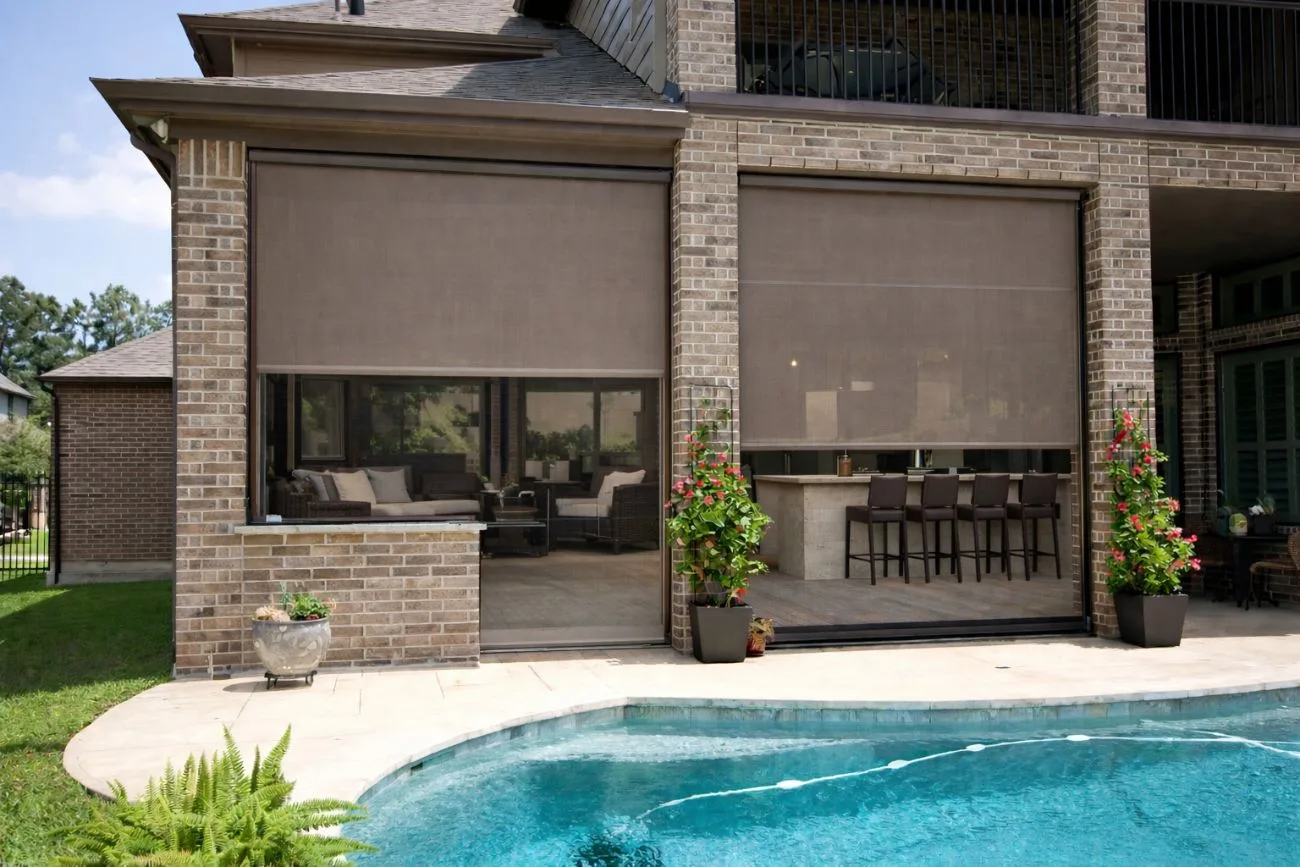
Shade on your patio in 4 weeks, or $500 back
Shade is worth most in the months you are least likely to get it installed. So we put a deadline on it, and $500 behind the deadline.
4-Week Install Guarantee
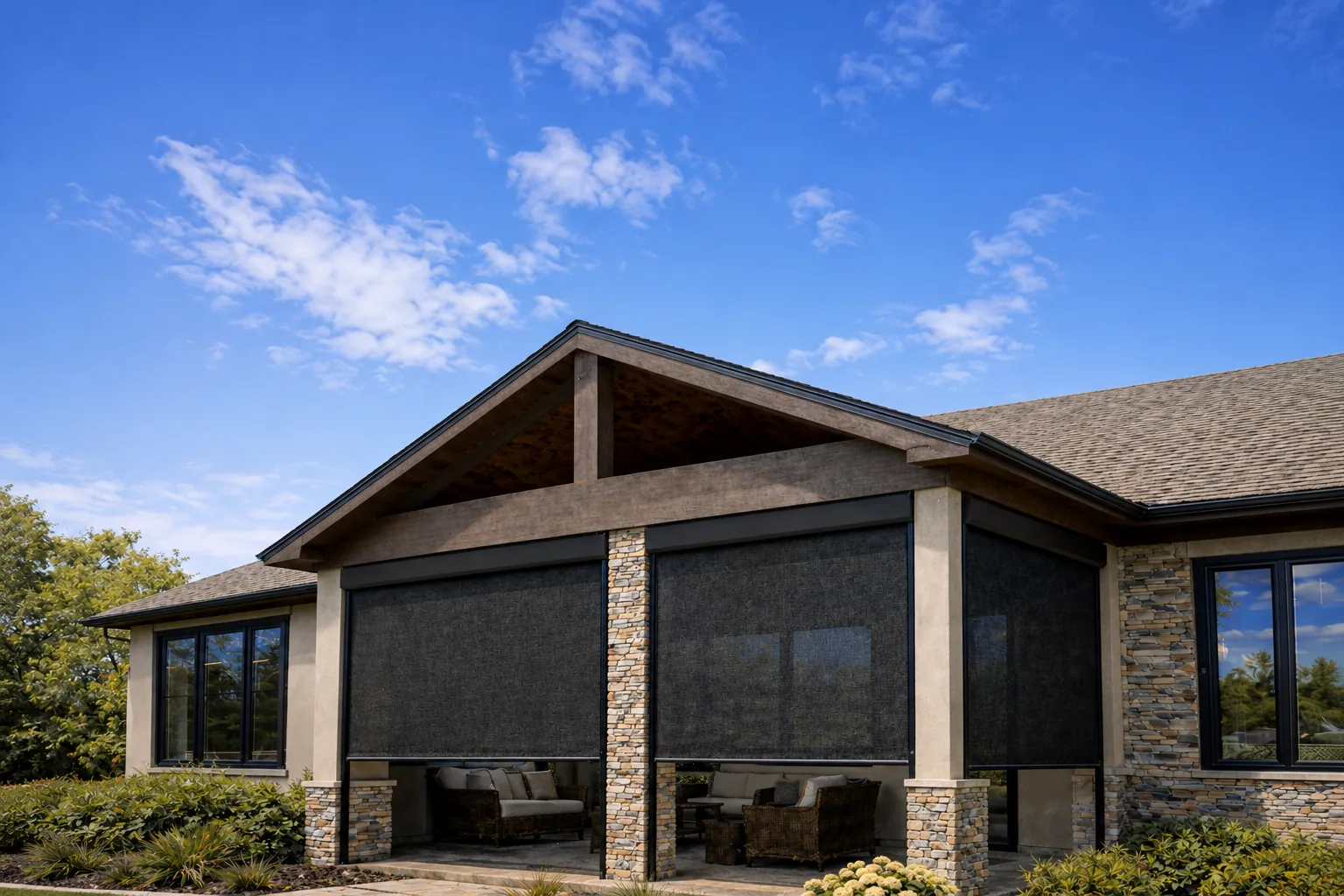
Your install date in writing, before we leave.
Plus, choose your FREE upgrade:

 Option 2
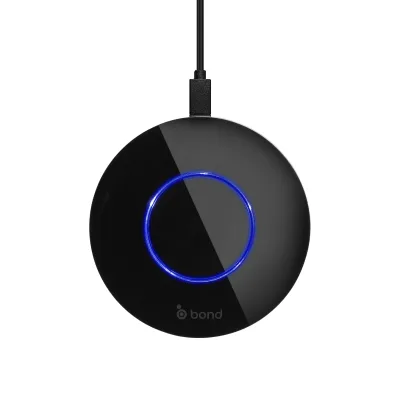
FREE Bond Bridge
A $200 value. Control your screens from your smartphone.
Available with eligible in-stock fabrics, frame colors and tracks.
Why 4 weeks is possible: the window applies to colors already on the shelf here in the Valley. Eligible fabric colors are Espresso, Black, Tobacco, and Tumbleweed. Eligible frame colors are Bronze, Mocha, and White. Any other color in the range is still yours, on standard lead time instead.
Your eligibility is confirmed in writing before you place a deposit, never after. If your project falls outside the guarantee for any reason, your specialist tells you at the quote and gives you a realistic install window instead.
What Affects Price
What does shading a window or patio cost?
Every shade is custom-fit, so price follows the size of the opening, the fabric, and the controls. The honest number comes after someone measures.
Automatic Shade
Shade that drops before the afternoon does
The best shade is the shade that is already down when the sun arrives. Run yours on a button, on a schedule, or on its own power.

Remote control and wall switches
One touch drops the screen on a patio, a window, or a storefront opening. Group several screens onto one channel so the whole west side comes down together, or wire in a wall switch beside the door you actually walk past on your way outside.
See motorized screen options →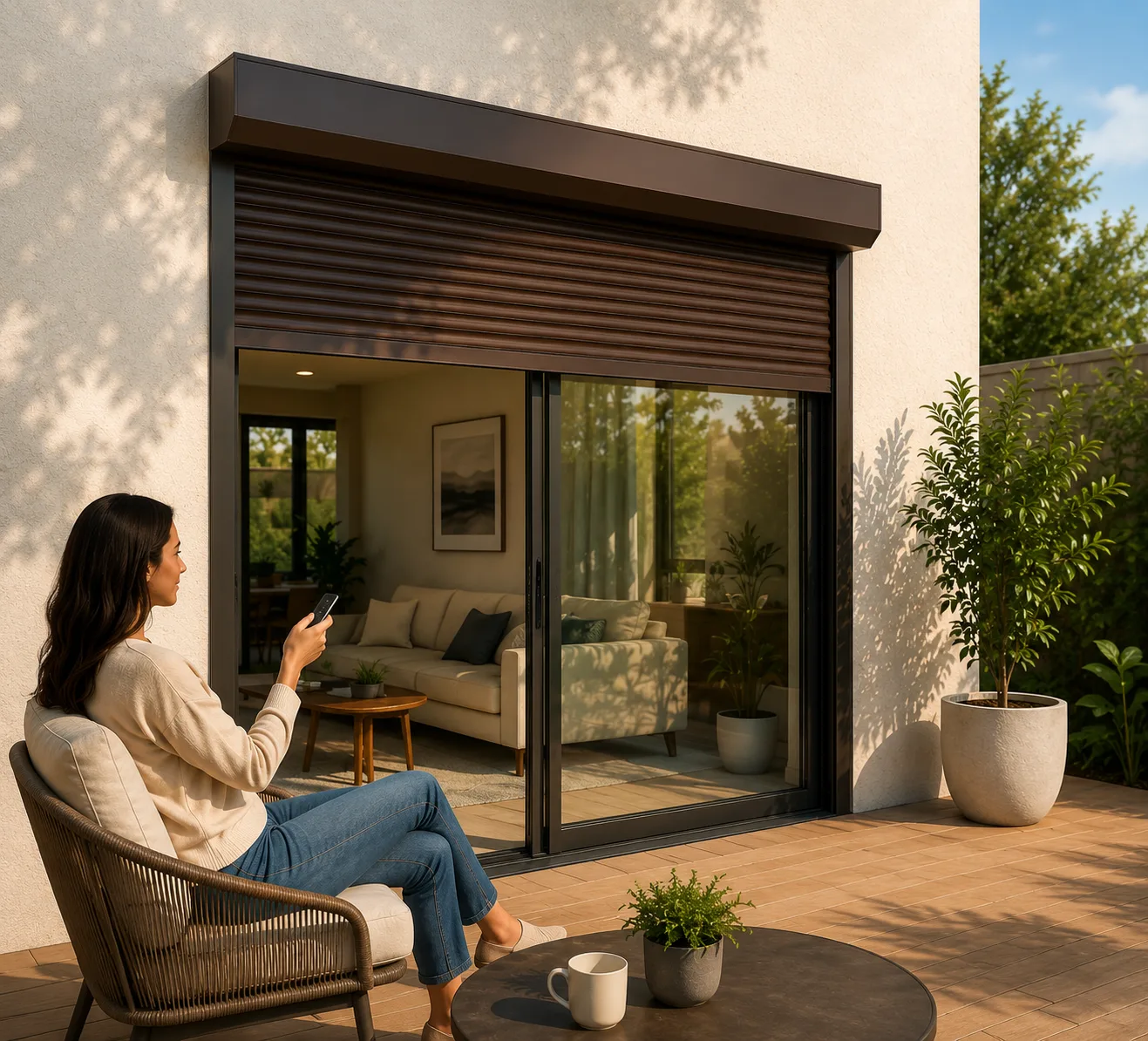
Schedules, smartphone, and voice through Bond Bridge
Set the screens to drop through the hottest part of the afternoon and lift again in the evening, and the shade takes care of itself whether or not anyone is home to think about it. That is the capability that matters most for heat, because sun gain you never let in is easier to deal with than sun gain you have to cool back out.
The Bond Bridge is a small smart hub that adds the rest: run your screens from your phone anywhere, or by voice through Amazon Alexa and Google Assistant.
See smart control options →
Solar and battery motors
Premium Italian-made solar motors run completely wireless, with no new wiring and no electrician, because the Arizona sun that created the problem keeps the motor charged year round. That puts shade on a pergola at the back of the yard or a detached patio nowhere near existing power.
It also means the screens still raise and lower in an outage, when the house is heating up and shade matters most. Battery options cover shaded openings that do not get enough direct sun.
See solar motor options →Compare Your Options
How motorized patio shades compare to other ways to shade an opening
Every option here is genuinely good at something. What follows is where each one earns its place, and where it runs into trouble in this climate.
| Option | Heat stopped outside | View and airflow kept | Retracts on demand | Handles monsoon wind | Where it falls short |
|---|---|---|---|---|---|
| Retractable patio shades | ✓ | ✓ | ✓ | Partly | Costs more up front than a covering you hang inside, and needs a proper measure and install. Zip tracks hold the fabric in gusts, but retract it in a real blow. |
| Interior blinds and curtains | ✗ | ✗ | ✓ | ✓ | Sits on the inside of the glass, so it only acts after the heat is already in the room. Closed, you lose the view too. |
| Window film or tint | Partly | ✓ | ✗ | ✓ | Works at the glass rather than outside it, and it is permanent. Dims the room in December exactly as much as in July. |
| Fixed exterior sun screens | ✓ | ✓ | ✗ | ✓ | Genuinely effective, because it also stops the sun outside the glass. What you cannot do is take the shade back for the winter. |
| Awnings and shade sails | Partly | ✓ | Partly | ✗ | Shades from above, which is the wrong angle here. Low western sun arrives underneath from three o’clock on, and sails come down for monsoon wind. |
| Patio umbrellas | Partly | ✓ | ✓ | ✗ | Cheap, movable, and shades the table you are sitting at. Covers a small footprint, needs repositioning as the sun moves, and goes over in a gust. |
| Rolling shutters | ✓ | ✗ | ✓ | ✓ | A solid aluminum barrier. Blocks heat and light completely and adds security, privacy, noise reduction, and protection from storm debris and blown dust. Closed, there is no view through it and no airflow. It is the right tool where the requirement is protection at the opening. See Metro Phoenix rolling shutters → |
The bottom line: in practice most properties mix. Rolling screens on the west patio and the sliding door where the view matters, shutters on the openings where security or storm protection is the requirement, and blinds inside for privacy at night. Your specialist will tell you which openings actually need what, including the ones that need nothing.
How It Works
Simple process. Custom results.
Request a Quote
Tell us about your property and schedule your free on-site estimate.
On-Site Consultation
A local specialist measures every opening, checks which way each one faces, and recommends the right mesh, openness, and controls for that exposure.
Custom Configured
Your screens are configured and built to order from your exact measurements, mesh, and color selections.
Professional Installation
Our own local crew installs your screens, tests every motor, and walks you through the controls.
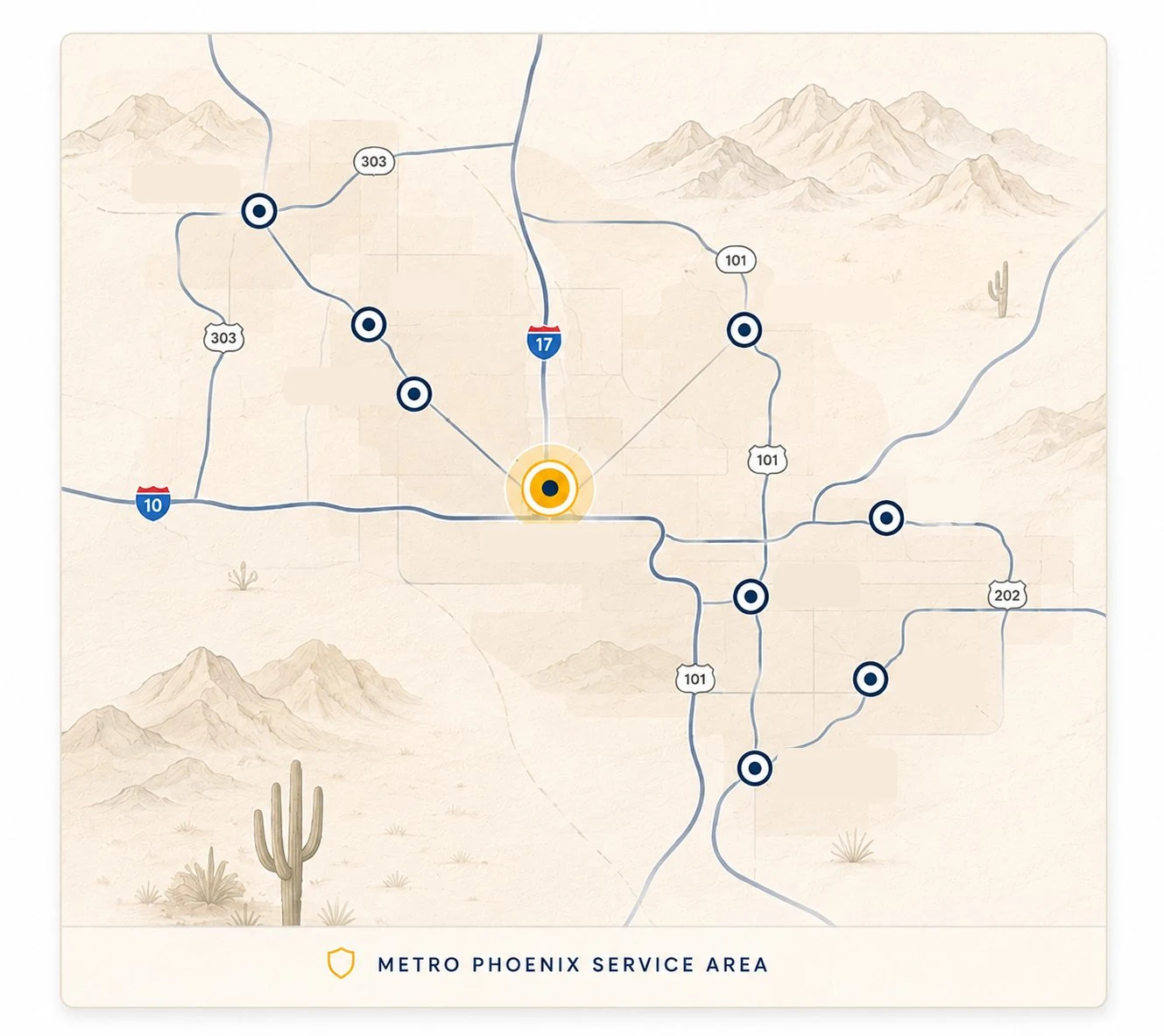
Proudly Serving
Metro Phoenix
The sun does not treat the whole Valley the same way. A west-facing patio in Surprise takes a different afternoon than a courtyard in downtown Phoenix hemmed in by buildings, and a Gilbert pool deck with no mature trees is a different problem again. We measure the exposure at your property, not at a zip code, and we custom-fit and install rolling screens, patio shade screens, and privacy screens across Metro Phoenix.
What Our Customers Say
Trusted by your neighbors across Metro Phoenix
“I love, love my Roll-A-Shield. We have 2 windows that got full sun in the AM and PM and our windows were so hot. Now that we can close them there is no heat on them.”
Donna V.“Excellent job from start to finish. The quoting process was an easy no-pressure process. When the installer came to make official measurements, there was a concern with one preliminary measurement that was addressed and resolved through good communication.”
Monroe T.“Total game changer. The install was clean and professional, and the product works exactly as it should, smooth, sturdy, and easy to operate.”
Kaleb S.★★★★★ 4.9 average across 211 Google reviews. Read them on Google →

Ready to take the heat off your patio?
Schedule a FREE on-site estimate with a local rolling screen specialist from Roll-A-Shield.
Keep Exploring
More on shade, screens, and staying cool
This page is about the sun problem. Follow the links below for the wider product picture, the numbers, and the reading.
Metro Phoenix Rolling Screens
The full guide to rolling screens across the Valley: every screen type, category, color, and control option in one place.
See the pillar guide →4-Week Install Guarantee
Installed within 4 weeks of your deposit or you get $500 back. The full terms, eligible colors, and free upgrade options.
See the guarantee →What Rolling Screens Cost in Phoenix
What actually drives the price of a screen project, and how to think about it before your estimate.
See pricing →Motorized Retractable Patio Screens
The product deep-dive: motors, solar power, smart controls, options, and the gallery.
See the product →Rolling Screens & Shades
Our screen and shade overview, including privacy and blackout fabric options.
See screens & shades →Sun & Heat Protection
The use case in full: how Valley properties handle sun, heat, and glare at the opening.
See the use case →Patio & Outdoor Living Enclosures
How Valley homeowners turn a patio into a room they use most of the year.
See the use case →Beating the Heat
From the blog: how shutters and shades keep Valley homes cooler for less.
Read the article →Common Questions
Sun, heat, and shade questions, answered.
What Metro Phoenix homeowners and businesses ask us when the problem is the sun: which openings need shade, what it changes, and how rolling screens compare to the other options.
01What are motorized patio shades, and how do they work?
Motorized patio shades are exterior mesh shades that roll down over a patio, window, or door opening from a slim housing above it. The fabric runs in side tracks that hold it taut, and a motor raises and lowers it at the touch of a button. Because the shade sits outside the glass, it turns the sun away before the heat gets in. When you want the light back, it retracts fully into the housing and the opening is completely clear.
02How much do motorized patio shades cost?
There is no list price, because every shade is built to the opening it covers. What moves the number is the width and height of the opening, the fabric you choose, and whether you want it motorized or manual. A wide patio span with a motor is a different project from a single bedroom window. The only figure worth anything is the one you get after someone measures, and that comes with the free on-site estimate, in writing and with no obligation. Financing is available if you would rather spread it over time. For a fuller breakdown, see what rolling screens cost in Phoenix.
03How do you reduce heat coming from windows?
Stop the sun outside the glass rather than after it has already come in. That is the whole difference. Blinds, curtains, and window film all sit on the inside, so by the time they act the energy is already in the room and they can only manage it. An exterior shade intercepts the sun a few inches earlier, before it reaches the window at all. In Phoenix the openings worth treating first are the west and south facing ones, because that is where the heat gain concentrates and when it lands in the late afternoon.
04How do you block the afternoon sun on a west-facing patio?
You have to block it at the opening, not from above. From roughly 3pm to sunset the western sun sits low and comes straight in at the patio rather than down onto it, which is exactly the angle a roof overhang, an awning, or a shade sail cannot cover. The overhang shades the wall at noon and does nothing at five. A shade that drops down the face of the opening intercepts sun at that low angle, then rolls away when the sun moves off.
05Are retractable patio shades better than fixed ones?
For a Phoenix property, usually yes, and the reason is the calendar rather than the product. A fixed screen or a permanent structure commits the opening to shade in December exactly as much as in July. But winter sun is low, it reaches further into the room, and it is doing you a favor. Retractable shades for patio openings let you take the shade back for the months you want the warmth, and lift out of the way during monsoon wind. You are choosing shade for the hours you want it rather than living with it year round.
06Are rolling screens for patio openings the same thing as patio shades?
Yes. Rolling screen, patio shade, retractable screen, and roller shade all describe the same system: a fabric roll in a housing, side tracks, and a motor or a crank. The name usually follows the job it is doing. People say shade when they are thinking about sun and heat, and screen when they are thinking about bugs or privacy. What actually changes between them is the fabric in the roll, not the hardware around it.
07Do roll down patio shades block the view?
No, you see through them, though how clearly depends on the fabric. Openness is how much of the weave is holes: a more open fabric keeps a crisper view and more airflow but lets more sun through, and a tighter one does the reverse. Color decides the rest. Darker tones absorb light rather than scattering it, so your eye reads through the weave instead of at it. Looking out is always clearer than looking in, which is why a patio roll down shade can preserve your view and still give you daytime privacy.
08Where can I get motorized patio shades near me in Metro Phoenix?
Across the whole Valley, from our own crews rather than a subcontractor. We measure and install in Phoenix, Scottsdale, Tempe, Mesa, Chandler, Gilbert, Glendale, Peoria, and Surprise, and in the communities between them. The sun does not treat all of those the same way, which is the part a search result cannot tell you: a west-facing patio in Surprise with nothing on the horizon is a different problem from a courtyard in downtown Phoenix shaded by neighboring buildings. Roll-A-Shield has been doing this from the Valley since 1979, licensed, bonded, and insured under ROC 342265.
09Do motorized sun shades for patio openings need wiring or an electrician?
Not with a solar motor. Solar units are self-powered and arrive as a package, motor, battery, and panel already wired together, so there is no new wiring, no electrician, and no opening up walls or the electrical panel. The panel is mounted where it gets the best sun and keeps the motor charged. That changes where a shade can go: a pergola at the back of the yard, a detached patio, a courtyard nowhere near existing power. Hardwired motors remain available where they make more sense, and only those involve a wiring run.
10Can motorized outdoor patio shades be set on a schedule?
Yes, and for heat it is the most useful thing a motor does. Set them to come down through the hottest part of the afternoon and lift again in the evening, and the shade is in place before the sun arrives, whether or not anyone is home. That timing is the whole point, because sun you never let in is far easier to deal with than sun you have to cool back out. Scheduling runs through a Bond Bridge, a small hub that also lets you run them from your phone or by voice through Amazon Alexa and Google Assistant. Sun and wind sensors can drive them too.
11Do motorized shades for patio spaces still work in a power outage?
Solar and battery motors do, because they are not drawing from the house at all. That matters more here than it sounds: an outage in July is exactly when a house heats up fastest, and being able to drop the shades on the west side is worth having. A hardwired motor will not run without power, so if outage operation matters to you, say so at the estimate and we will spec accordingly.
12How much cooler does a shaded patio actually get?
A shaded patio can feel 20 to 30 degrees cooler than the same space in full sun. Two things are worth understanding about that. It is what the space feels like rather than what a thermometer in open air reads, because most of what makes a patio unbearable is direct radiant sun on your skin and on the surfaces around you. And it depends on the exposure, the time of day, and the fabric. The honest version is that shading a west patio in August turns a space you walk through into a space you can sit in.
13Do retractable sun shades for patio openings hold up to monsoon wind?
With the right track system, yes, and with the sense to retract them in a real blow. Zip side-retention tracks lock the fabric into the rails so it stays taut instead of billowing or pulling loose, which is what you want on a wide span. Even so, the safest place for any shade in a serious monsoon gust is up in its housing, and a wind sensor will retract it automatically. Wind damage is not covered under the fabric warranty, which is exactly why the sensor exists. If what an opening really needs is protection from storm debris rather than shade, a rolling shutter is the correct tool for that opening.
14What warranty comes with patio sun shades?
The manufacturer warranty runs 10 years on the fabric against fading, 5 years on the motor, 5 years on the extrusions and parts, 2 years on the electronics, and 1 year on the installation labor. Fabric gets the longest term because Arizona sun is hardest on fabric. Wind damage is excluded, as is closing the shade on an object, unauthorized modification, misuse, and acts of God. After the first year, covered parts stay covered but labor for a repair becomes the customer's responsibility.
15What colors do patio sun shades come in?
Six fabric colors and six powder-coated frame finishes. On fabric, Black and Charcoal give the crispest see-through visibility and the best glare control, while Tumbleweed and Tobacco sit down into desert and Southwest exteriors at the cost of some of that crispness. Espresso and Sable land between the two. Frame and housing color is a separate choice, matched to your stucco, fascia, or trim so the housing disappears when the shade is up. Your specialist brings physical samples, and it is worth seeing them on the actual wall before you decide.
16Do roll down shades for patio spaces keep bugs out?
Only if you choose insect mesh, which is a different fabric from sun-control mesh. Sun fabric is woven for heat and glare, and while it is not an open doorway it is not built to seal an opening against mosquitoes or scorpions. Insect mesh is woven tighter and closes against the side tracks so there is no gap at the edges. This matters more than it sounds, because the hours you win back with shade in the afternoon are the same hours you lose to bugs at dusk. Plenty of patios end up with insect mesh where people sit in the evening and sun fabric on the windows that only ever needed heat control.
17How do you clean motorized outdoor shades for patio openings?
Rinse the fabric with a garden hose and let it air dry, and that is genuinely most of it. For anything the hose leaves behind, use a soft brush or a cloth with mild soap and plain water. What to avoid is pressure washers and harsh household cleaners, both of which can damage the weave and the coating that makes the fabric perform. In the Valley the practical driver is dust rather than dirt, so a rinse after a monsoon blow is worth more than a schedule. Retract the shade only once it is dry rather than rolling damp fabric back into the housing.
18Do patio shades lower your electric bill?
They reduce the heat your air conditioner has to deal with, but we do not quote a savings figure, because an honest one does not exist. What a shade saves depends on your home, your glass, your insulation, how many openings you cover, which way they face, and how you run your thermostat. What we can say plainly is the mechanism. Heat gain through west and south glass concentrates in the late afternoon, when the system is already working hardest, and stopping it outside removes that load before it arrives rather than paying to cool it back out.
19How fast can you install patio shades in Phoenix?
Within 4 weeks of your deposit, or we send you $500. Your install date is confirmed in writing before we leave your home, and final measurements are taken at that same visit rather than on a separate trip back. The window depends on choosing from the colors already stocked here in the Valley, which is the practical reason the date can be promised at all, and any other color in the range is still available on standard lead time. Eligibility is confirmed in writing before you place a deposit, never after. Full terms are on the 4-Week Install Guarantee page.
20Do sun shades for patio openings work on windows and storefronts too?
Yes. The same system fits any opening with something solid to mount to, so it goes on bedroom and living room windows, sliding glass doors, gazebos and pergolas, pool decks, storefront glass, restaurant patios, drive-thru windows, and school walkways. Only the size and the fabric change. That is why a single project can mix them: tighter sun fabric on the west windows, insect mesh where people sit in the evening, and zip tracks on the widest span.
Still have questions?
Call (480) 376-1629 and talk it through with a local specialist, or book the free on-site estimate and we will walk your openings with you.
Request a Free Quote
Get shade on the openings that need it today.
Every property faces the sun differently. Our Metro Phoenix team will walk your openings, tell you which exposures actually need shade, help you choose the mesh, openness, and colors that fit, and give you an exact price.
GET A FREE QUOTE